
Written by Oğuzhan Karahan
Last updated on Aug 28, 2026
●10 min read
Qwen-Image-2.0 vs 1.0: Inside Alibaba's Unified 7B AI Vision Model [2026 Comparison]
Master Qwen-Image-2.0's unified 7B vision architecture.
Learn how to generate native 2K AI images and complex typography without a GPU using AIVid.'s unified credit system.
![Qwen-Image-2.0 vs 1.0: Inside Alibaba's Unified 7B AI Vision Model [2026 Comparison]](/_next/image?url=https%3A%2F%2Fcdn.creatide.ai%2Fassets%2Fuploads%2Fimages%2F2026%2F04%2FcD0dm9uQHtjM3jkCZpuCKq6s.jpeg&w=3840&q=75)
Most open-source vision models completely fail at spelling.
It's frustrating.
But that reality shifted on February 10, 2026.
Because Alibaba dropped a unified 7B vision architecture that actually understands native bilingual text.
In this post, I'm going to show you EXACTLY how Qwen-Image-2.0 fixes broken typography and spatial reasoning for good.
As a result, you can generate perfect infographics without manual post-processing.
The best part?
You don't need a massive local GPU to test these claims.
You can run it right now using AIVid. as your unified creative engine.
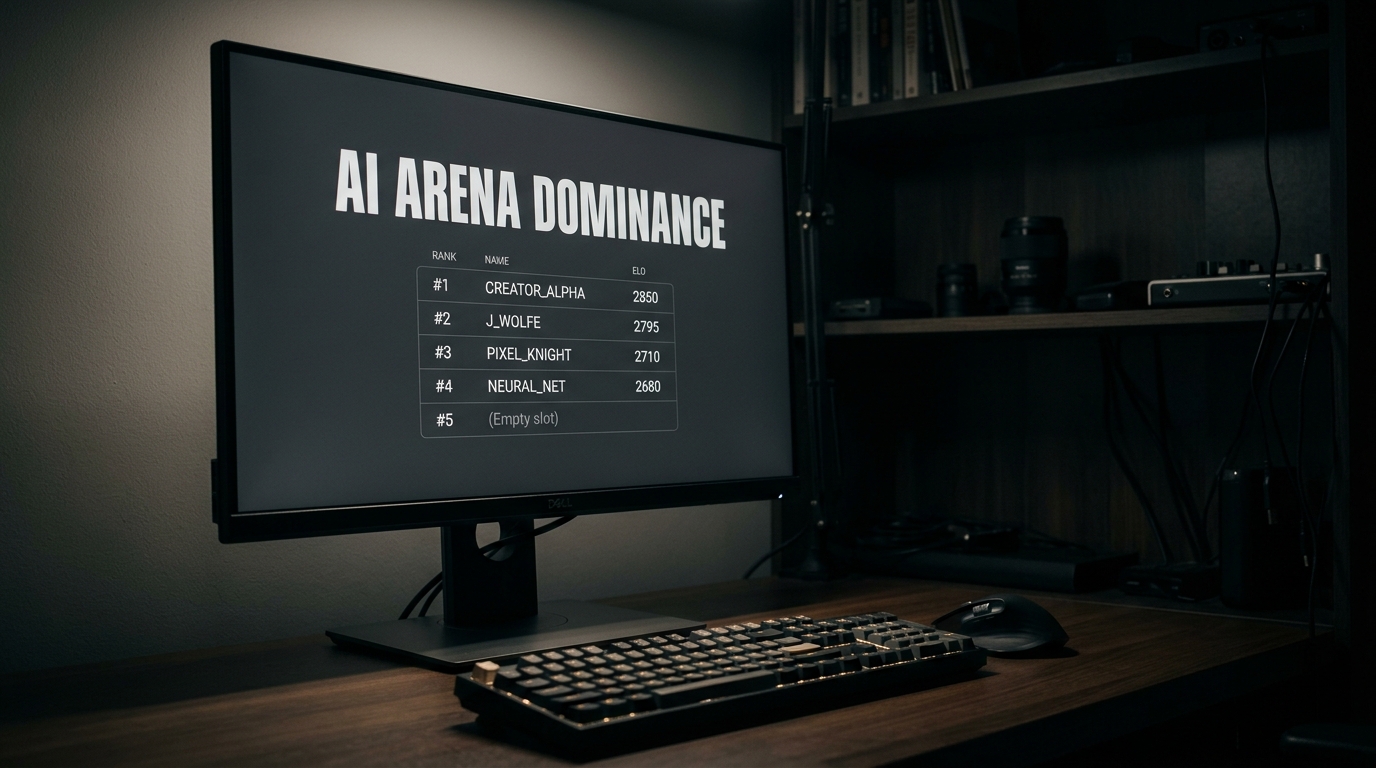
Here's exactly how this upgraded model dominates the AI Arena ELO leaderboard blind tests.
The Core Comparison: Qwen 1.0 vs 2.0 [Data Analysis]
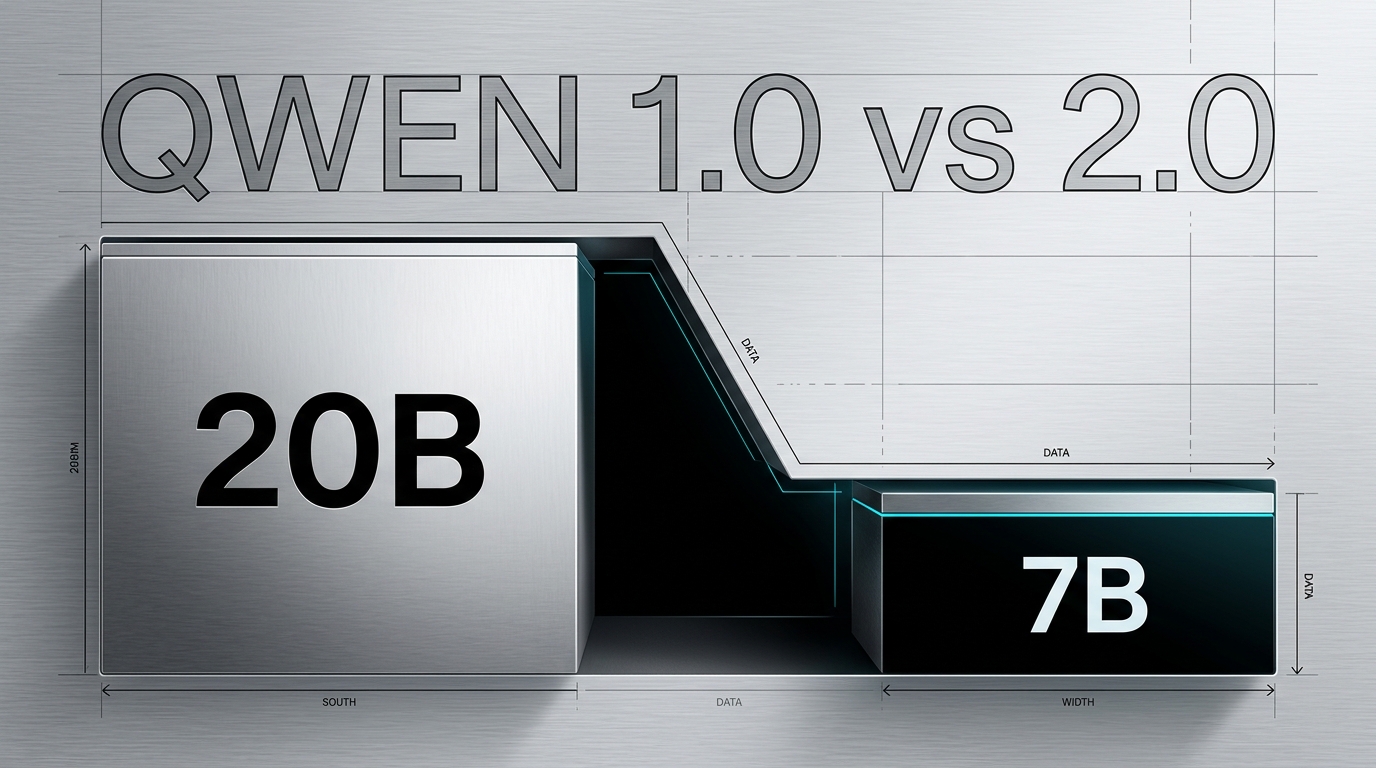
Qwen-Image-2.0 transitions from a 20B to a 7B parameter architecture, achieving a 65% size reduction while outperforming version 1.0. This evolution leverages the Qwen2-VL foundation to unify text-to-image generation and image editing into a single, high-speed multimodal pipeline optimized for 2026 enterprise-grade inference speeds.
Older AI models relied on brute force to understand complex prompts.
And version 1.0 was no different.
It used a heavy 20-billion parameter backbone to process visual data.
But that massive size created a massive problem.
It made enterprise-scale generation incredibly slow and expensive.
Which brings us to the biggest upgrade in this release.
Alibaba engineered a massive 65% reduction in total parameters.
They shrunk the model down to a highly optimized 7B size.
How is a smaller model actually smarter?
It all comes down to its new foundation.
This system is built directly on the highly acclaimed Qwen2-VL architecture.
Instead of treating vision and language as separate steps, it processes them concurrently.
Because of this, the model requires vastly less computing power to operate.
In fact, this parameter drop drastically improves inference speed.
You can now hit sub-second latency for standard 1024x1024 generation cycles on H100 hardware.
| Feature | Version 1.0 | Version 2.0 |
|---|---|---|
| Parameter Count | 20 Billion | 7 Billion |
| Architecture Foundation | Standard Diffusion | Qwen2-VL |
| Size Reduction | N/A | 65% |
| Generation Speed | High Latency | Sub-second (H100) |
When analyzing Qwen 2.0 vs 1.0, raw speed is only half the story.
The older generation used completely different modules for creating and modifying visuals.
If you wanted to generate a scene and then edit it, you had to jump between disconnected tools.
Not anymore.
This 7B framework introduces complete pipeline unification.
Which means text-to-image generation and selective image editing now happen in a single continuous stream.
You use the exact same weights to generate a brand new image or to outpaint an existing one.
This eliminates the modality gap that plagues older diffusion engines.
Your text prompts directly control spatial reasoning without losing context during complex revisions.
Here is a quick breakdown of what this unified pipeline handles natively:
Zero-shot text-to-image synthesis.
High-precision localized inpainting.
Context-aware outpainting for aspect ratio expansion.
Visual grounding using precise pixel coordinates.
This optimization means you no longer need a massive server farm to run high-end visual tasks.
The model is fully capable of running efficiently on mid-range enterprise hardware.
Simply put, this single-stream approach is exactly why this compact model easily out-benches its heavier predecessor.
And it sets a brand new baseline for high-volume content production.
Pushing the Limits: 1,000-Token Typography (Explained)
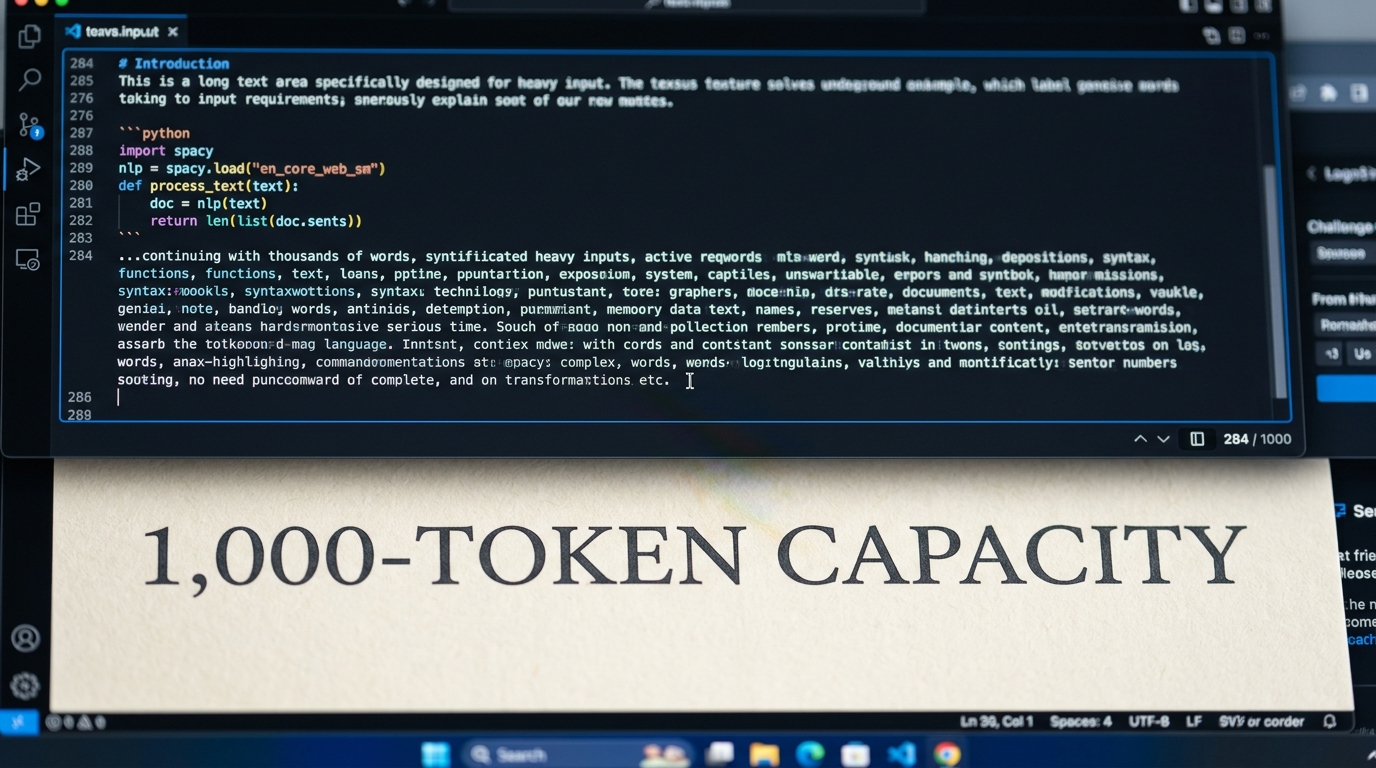
Qwen-Image-2.0 redefines AI typography generation by supporting massive 1,000-token prompts. This expanded context window allows for dense, multi-layered text instructions and complex layout control, enabling the model to render entire paragraphs, poetic verses, or intricate graphic design layouts with high structural fidelity and character accuracy.
Standard diffusion models treat text as an afterthought.
They clip your prompt at 77 tokens and hope for the best.
Which means long-form copy instantly turns into unreadable gibberish.
But this new architecture takes a completely different approach.
It utilizes a massive 1,000-token vision-language context window.
This expanded capacity fundamentally changes how AI handles text-heavy requests.
You can now feed the engine incredibly dense, multi-layered instructions.
How does it actually map hundreds of words to exact pixels?
The secret lies in a highly specialized cross-attention mechanism.
This system creates a precise token-to-pixel mapping process.
It uses transformer-based text-to-canvas alignment logic to lock each letter into place.
Because of this, the model easily handles multilingual character rendering.
In fact, it natively supports over 60 different writing scripts.
Let's look at a real-world example of this tech in action.
The 2025 Beijing Design Week Digital Exhibition put these limits to the test.
Designers used the engine to render a 500-character classical poem.
The text was generated directly onto a simulated silk scroll.
The result?
It reproduced every single complex stroke without any character degradation.
Here is exactly what this prompt capacity difference looks like:
| Feature | Standard 77-Token Limit | 1,000-Token Capacity |
|---|---|---|
| Text Output | Truncated and garbled | Full paragraphs of legible text |
| Sentence Structure | Fails at complex grammar | Perfect structural fidelity |
| Layout Control | Random placement | Precise sub-pixel spacing |
Watch this Fahd Mirza walkthrough to see Qwen-Image-2.0 build a professional infographic with bilingual typography in a live test.
This clip belongs here because it shows the long-form text problem getting solved on screen:
Complex Chinese characters, English headers, and sharp figures such as 34.2 percent in one layout.
Pay attention to font weight, number rendering, and how the same model later edits the scene without breaking the type.
But raw capacity is not enough for professional design work.
You also need strict structural control over your layout.
Which is where spatial coordinate tokenization comes in.
This feature allows for sub-pixel layout positioning directly from your text input.
Older systems forced you to generate text layers separately in external software.
Now, the unified vision architecture manages text and image data in one single stream.
Here is how you execute it:
Precise Text Placement
- Draft your copy
Write your full paragraph or infographic text within the 1,000-token limit.
- Add coordinate markers
Insert explicit coordinate markers like [x,y] next to specific sentences.
- Generate the layout
The model will force that exact text into your chosen image quadrants.
This precision is fueled by native glyph-aware training datasets.
The model actually understands the physical shape of the letters you request.
As a result, you are no longer just rolling the dice on a text prompt.
You are directing a highly capable typography engine.
How to Deploy Qwen-Image-2.0 on AIVid. (Step-by-Step)
Deploying Qwen-Image-2.0 on AIVid. requires zero local hardware configuration. Users simply access the Alibaba AI image generator through the AIVid. cloud architecture, which handles heavy inference tasks server-side. This enables high-speed 2K generation and complex typography rendering with absolutely no GPU needed.
Setting up open-source vision models manually is a massive headache.
You usually have to wrestle with complex dependencies and custom software environments.
But you can skip all of that entirely.
Because of this cloud-native environment initialization, you bypass local hardware bottlenecks completely.
The entire weight distribution loads in sub-second durations.
Which means you get instant access to the engine.
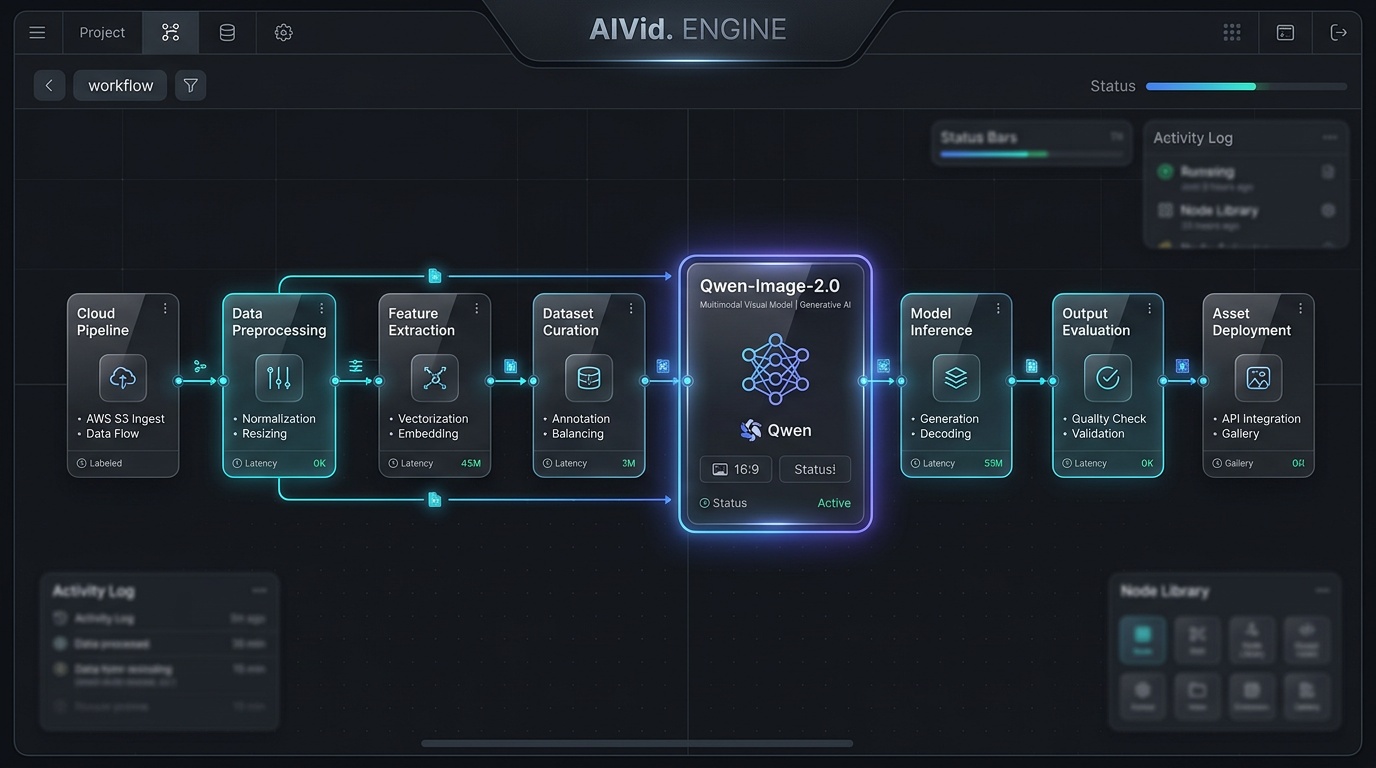
Here's the exact pipeline you'll experience:
| Phase | Action | Result |
|---|---|---|
| 1. User Input | Submit multi-modal prompt | Instruction-following injection |
| 2. Cloud Inference | Server-side processing | Dynamic VRAM allocation |
| 3. Final Output | Direct text-to-pixel mapping | High-resolution visual asset |
Now let's walk through the actual execution.
Here's exactly how to start building assets right now:
The Deployment Blueprint
- Select the model
Navigate to your dashboard and choose the 7B engine from the dropdown menu.
- Inject your instructions
Enter your complex layout or typography request into the vision-language processing field.
- Execute the render
Hit generate to initiate the latency-optimized inference and receive your native 1024px output in under 12 seconds.
It really is that simple.
Remember Alibaba's viral "Creative Code" campaign from 2025?
They showcased the model rendering complex Chinese and English typography simultaneously within AI-generated street photography.
It circulated widely on LinkedIn because the OCR precision was completely flawless.
Now, that exact capability is at your fingertips.
But you can push this workflow even further.
If you're running a high-volume content operation, single-image rendering might slow you down.
That said, there's a proven workaround.
You can utilize your platform API key for batch processing prompts.
This strategy completely bypasses standard UI-based rendering limits.
It allows you to generate dozens of marketing assets simultaneously.
This direct text-to-pixel mapping guarantees your final asset matches your exact vision.
The Ultimate Multimodal Solution
Alibaba completely changed the rules of open-source image generation.
They proved that massive parameter counts aren't strictly necessary.
By condensing their architecture, they created a highly efficient production pipeline.
It delivers native high-resolution output and perfect typography out of thin air.
You no longer have to compromise on speed or visual quality.
And you can leverage all of this power right now.
Ready to test it for yourself?
Head over to the Ai Image interface to start generating.
Frequently Asked Questions
How does Qwen-Image-2.0 compare to version 1.0?
Qwen-Image-2.0 transitions from a 20B to a 7B parameter model, achieving a 65% size reduction while outperforming the previous version. It leverages the Qwen2-VL foundation to unify text-to-image generation and image editing in one pipeline.
How does the 1,000-token prompt support work in Qwen-Image-2.0?
The expanded context window handles dense, multi-layered text instructions for complex layouts and typography. This results in high structural fidelity and character accuracy for paragraphs or graphic designs.
Does Qwen-Image-2.0 require local hardware for deployment?
No. The model runs server-side with high-speed 2K generation and complex typography rendering. Users access it through the cloud architecture without GPU setup.
What is the benefit of the unified vision architecture in Qwen-Image-2.0?
It combines text-to-image and editing capabilities into a single, optimized pipeline. This streamlines workflows for 2026 enterprise-grade inference speeds.
Can Qwen-Image-2.0 handle intricate typography tasks?
Yes. With support for up to 1,000 tokens, it manages dense prompts for precise text rendering in various designs and poetic content.
How does the parameter reduction impact performance?
The shift to 7B parameters maintains superior performance despite the size cut. This makes the model efficient for high-volume or complex image tasks.
![Qwen 2 Image vs Qwen 1.5 Image: The Ultimate Breakdown [2026 Data]](/_next/image?url=https%3A%2F%2Fcdn.creatide.ai%2Fassets%2Fuploads%2Fimages%2F2026%2F04%2Ftv9S4S2nRhcCpDKEFQdS6Vkb.jpeg&w=3840&q=75)
![The Complete Guide to Wan 2.7 Image [2026 Edition]](/_next/image?url=https%3A%2F%2Fcdn.creatide.ai%2Fassets%2Fuploads%2Fimages%2F2026%2F04%2FsoKhuupOLngbObFJJKW2ASEk.jpeg&w=3840&q=75)

![Wan 2.7 vs Wan 2.6 Image: The Definitive Comparison [2026 Guide]](/_next/image?url=https%3A%2F%2Fcdn.creatide.ai%2Fassets%2Fuploads%2Fimages%2F2026%2F04%2FnquccQ1mdIw2fZ4g56KJd91e.jpeg&w=3840&q=75)