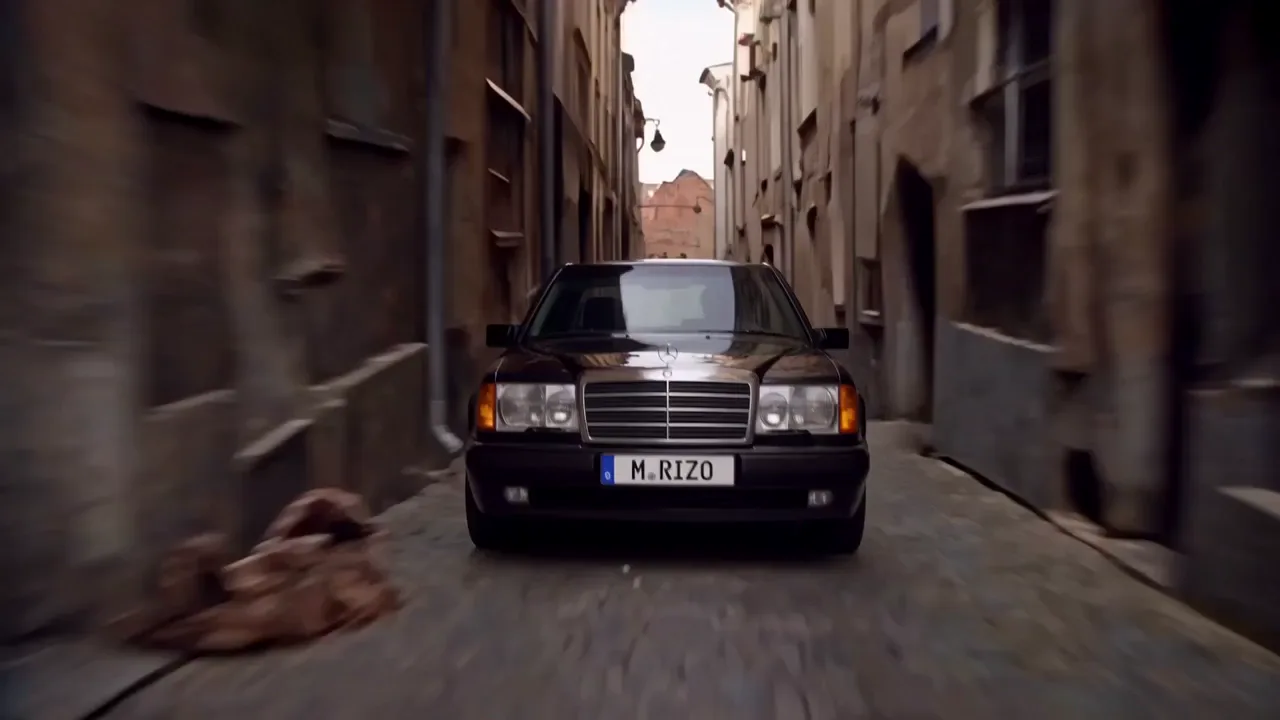
Black Classic Mercedes Races Through the City
Prompt
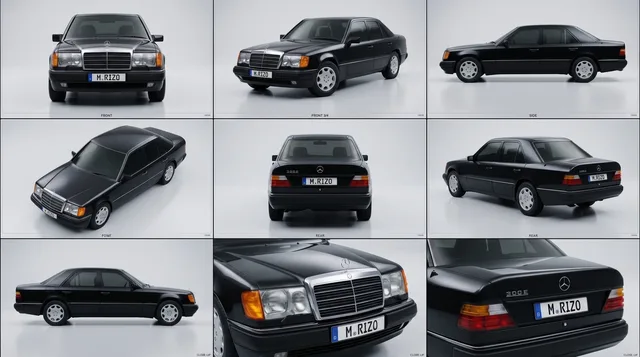
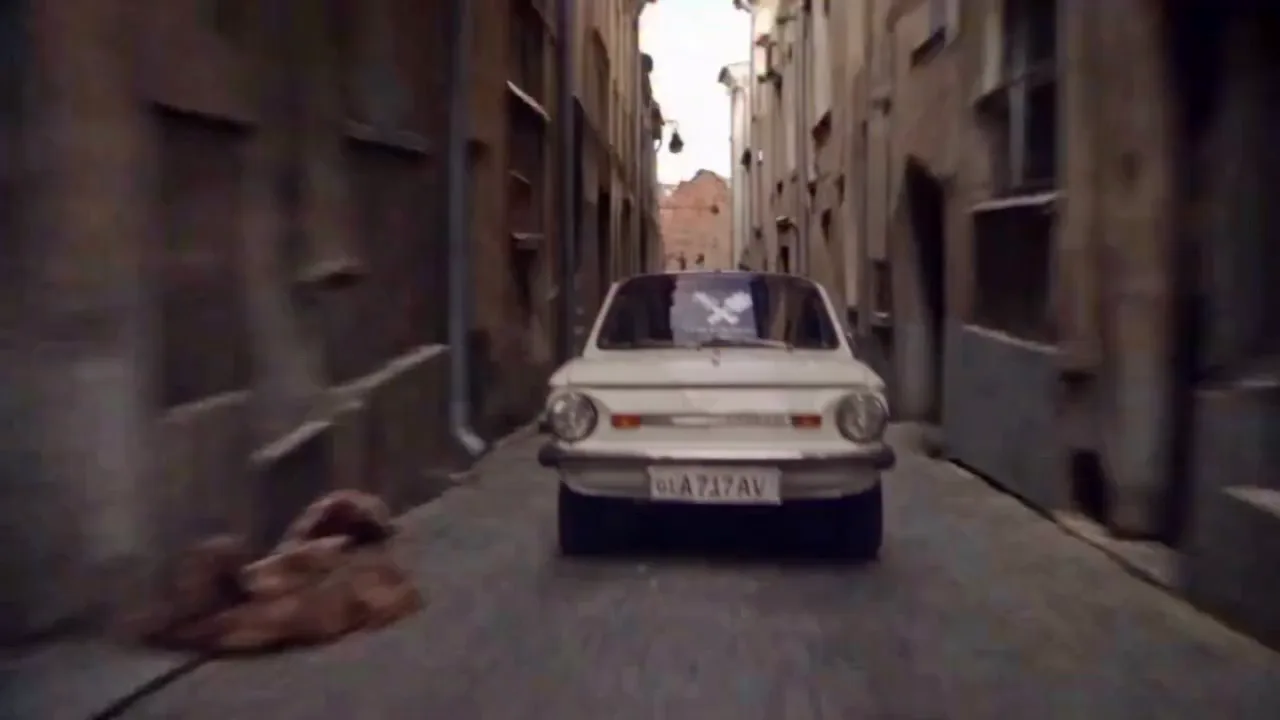
VEHICLE REPLACEMENT — SINGLE CAR, ALL SHOTS 1. REFERENCE ASSIGNMENT — ABSOLUTE LOCK Use as the source for motion, timing, camera behaviour, edits, environment and grade. @Image1 — THE CAR. It replaces the hero car in in every single frame, in all shots, from start to finish. 2. THE CAR — COMPLETE LOCK TO @Image1 @Image1 is the exclusive source of the car's appearance. Reproduce exactly, in every shot: - Make, model and body type - Real-world dimensions, overall length, width, height, wheelbase and ride height — all taken from @Image1, unchanged - Body volume and proportions: the exact shape of the bonnet, roof, boot, sills and wheel arches - Colour and paint finish, including metallic or matte character - Wheels, tyres, rims, their size and design - Headlights, tail lights, grille, bumpers, mirrors, door handles, glass, tint - Badges, logos, lettering and any markings - Interior visible through the glass where it can be seen Change and invent nothing. Do not restyle, do not tune, do not widen, do not lower, do not add or remove any part. THE CAR'S SIZE IS NON-NEGOTIABLE: the car keeps its own real-world dimensions from @Image1 in every shot. It is never stretched, lengthened, widened, raised or squashed to fill the space the original car occupied. Where @Image1's car is longer or shorter, taller or lower, wider or narrower than the original car, that difference is correct and must be visible. The camera does not adapt, the frame does not adapt, and the car is not enlarged to look impressive. It simply is the car from @Image1, at its real size, driving through that scene. 3. LICENSE PLATES — THE MOST CRITICAL RULE The registration plates on the car come ONLY from @Image1. Read the plate in @Image1 character by character — every letter, every digit, the region code box, the flag and the country code — and reproduce it exactly and completely on the car in the video, both the FRONT plate and the REAR plate, in every shot where a plate is visible. The original plate in (the red Lada's "С 679 АЕ 126") must be COMPLETELY GONE. It must not appear anywhere: not on the front, not on the rear, not in a reflection, not in a blurred frame, not for a single frame at the start or the end. Never keep the source video's plate. Never blend the two plates. Never invent a plate. Never leave the plate area empty or blank. The plates must be physically real: correct size and proportions for the car, mounted in the correct position on the front and rear bumpers, in the correct plate recess, with correct fonts, spacing, embossing, screws or frames, and correct lighting on them. They behave like real objects — they move with the car, catch the light, cast shadow, and blur correctly with motion at speed. 4. EVERYTHING ELSE IS UNTOUCHED — ABSOLUTE This is a ONE-CAR replacement. Every other element of stays exactly as it is, frame for frame: - The camera: the same four shots, the same order, the same edit points, the same durations, the same movements, the same rigs, the same lens character and vignetting - The environment: the narrow old-town alley with stone facades and shutters in shot 1; the urban street under the overpass with pillars, posters, apartment blocks and pedestrians in shot 2; the multi-lane highway through rocky limestone cliffs with guardrails and painted markings in shots 3 and 4 - All other cars, pedestrians, background traffic, street furniture and props - The midday sunlight, its direction, the sharp shadows, the warm high-contrast grade, the motion blur, the vignette - The music, the fade to black at the end, and the faint outro logo Do not restyle, regrade, relocate, remove or add anything. Do not change the speed of the car or the timing of the cuts. 5. SHOT-BY-SHOT LOCK Shot 1 [0:00–0:04.4] — the car drives straight toward the camera down the narrow street at moderate speed, filmed from a lead vehicle moving backward at matching speed, direct front angle, eye-level, medium distance. The full front of the car from @Image1 is visible: bumper, grille, headlights, bonnet, windscreen, and the FRONT plate with the number from @Image1 clearly legible. Shot 2 [0:04.4–0:07.4] — a low-angle rear three-quarter chase view close behind and slightly left as the car accelerates under the overpass. The entire rear and left flank of the car from @Image1 is visible: boot, rear lights, rear bumper, left side glass and wheels, and the REAR plate with the number from @Image1 clearly legible. Shot 3 [0:07.4–0:11.4] — a high-angle top-down rear tracking shot as the car drives fast on the multi-lane highway, long to medium distance. The roof, rear window, boot lid and rear plate of the car from @Image1 are visible. The plate reads the number from @Image1, sharp and unmistakable. Shot 4 [0:11.4–0:14.6] — a low mounted chase camera ahead of the car facing backward as it cruises fast along the highway, medium-close, slight three-quarter front. The full front fascia and right side profile of the car from @Image1 are visible, with the FRONT plate reading the number from @Image1 clearly legible. The final fade to black keeps the same timing. 6. REFERENCE IMAGE ISOLATION — CAR ONLY @Image1 is used ONLY to determine the car's appearance, size and plates. Never use it as a location, scene, lighting, colour-grade or camera reference. Do not copy its background, street, sky, people or framing. Do not reconstruct the reference photograph. The car exists only inside the locations of , under its midday sun and its grade. 7. CONTINUITY ACROSS ALL SHOTS It is the SAME single car in all four shots: same model, same colour, same wheels, same plates, same details, same size. No drift between shots, no recolouring, no part changes, no plate change, no scale change. The car never morphs, never gains or loses accessories, never changes body shape when the camera angle changes. 8. PHYSICAL INTEGRATION AND REALISM LOCK The car must look photographed, not rendered. Maintain correct contact with the road — all wheels on the asphalt, real tyre deformation, real weight transfer, believable suspension movement, correct wheel rotation matching the speed. Correct cast shadows on the road under the car, correct reflections of the environment in the paintwork and glass, correct highlights from the midday sun, correct motion blur consistent with the camera's movement, correct depth of field and focus. Avoid: plastic or toy-like paint; a pasted-in, disconnected look; floating or hovering; wheels sliding or spinning unnaturally; warped or melting body panels; wobbling number plates; unreadable, smeared or scrambled plate characters; shifting plate numbers between frames; fake or duplicated reflections; inconsistent lighting direction on the car; a car that is the wrong size for the road or the shot; visible masks, seams or compositing edges around the car. 9. STRICT PRIORITY ORDER 1. The car is exactly the car from @Image1, at its real dimensions, with its own number plates, in every shot. 2. The original red Lada is completely gone, including its plates. 3. The four shots, their timing, camera moves and edits are preserved exactly. 4. The environment, other traffic, light and grade are identical to . 5. Natural photographic integration. Resolve conflicts by rebuilding the car around the original motion, never by bending the car's real size or swapping its plates. 10. FINAL OUTPUT One coherent video, 16 seconds, horizontal 16:9, four shots with the same edits and the same fade to black. In every shot the hero vehicle is the car from @Image1 — its exact model, body shape, colour, wheels, details and real-world dimensions — carrying the exact number plates from @Image1 on both the front and the rear. Nothing of the original red Lada remains, and its plate number never appears. Replace the car. Keep the shots, the road, the light, the music and the plates from @Image1.
Swap target
Object swap
Resolution
720p
Video:
Images: