●11 min read
HappyHorse 1.0 vs SeeDance 2.0: The Ultimate AI Video Comparison [2026 Data]
Discover the definitive technical comparison between Alibaba's HappyHorse 1.0 and ByteDance's SeeDance 2.0, complete with 2026 benchmark data and architectural breakdowns.
The video generation hierarchy just flipped.
For months, ByteDance seemed virtually untouchable, but this sudden closed-beta launch from Alibaba's ATH completely resets the standard.
If you want to know exactly which model deserves your rendering time, you need a definitive HappyHorse 1.0 vs SeeDance 2.0 technical breakdown.
We analyzed their architectural differences.
Elo scores, and physics engines to cut through the viral hype.
Here is exactly how they stack up:
The Artificial Analysis Disruption: How HappyHorse Took #1 [Data]
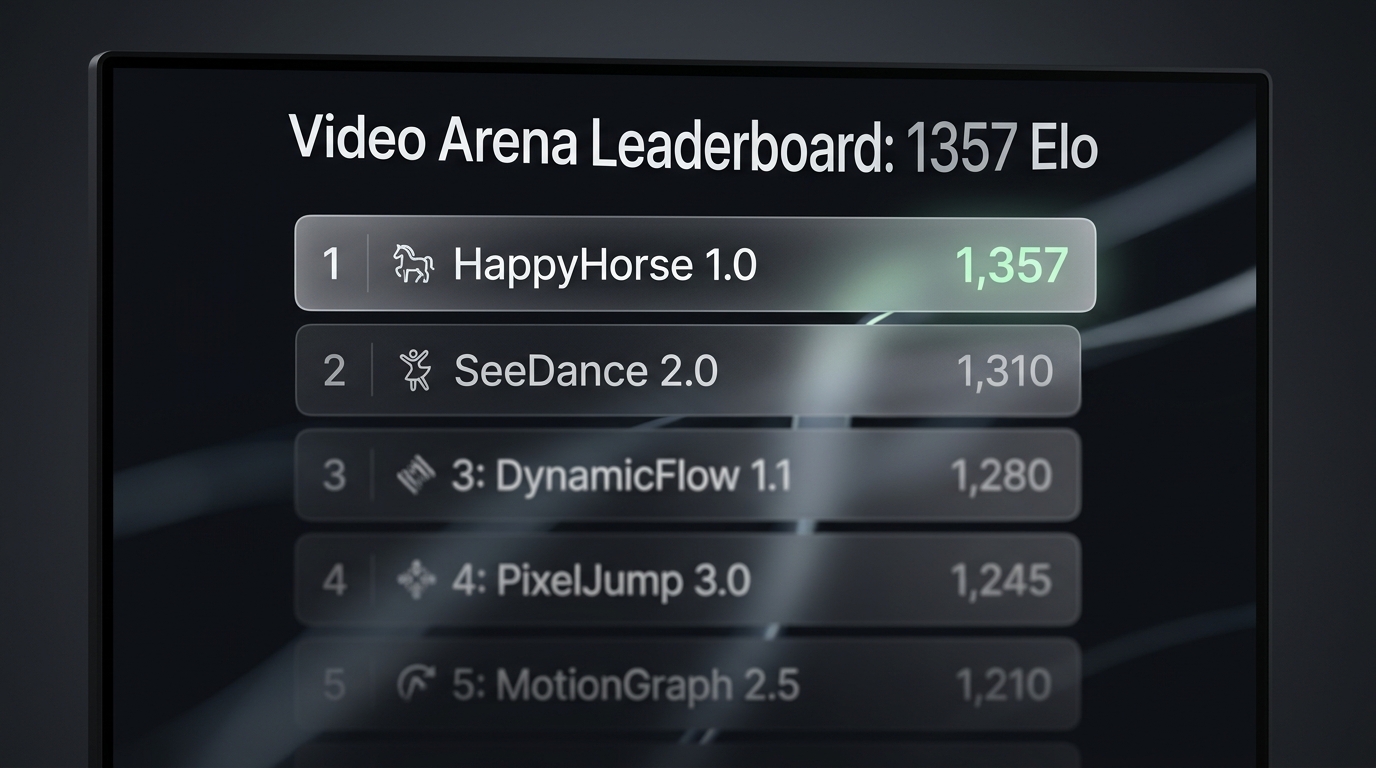
HappyHorse 1.0 currently holds the #1 ranking on the Artificial Analysis Video Arena leaderboard, disrupting the market with an unprecedented Elo score of 1,357. This strategic alias release by Alibaba successfully unseated SeeDance 2.0, establishing a new performance ceiling for the HappyHorse AI benchmark in early 2026.
In March 2026, a mystery unbranded model appeared on the leaderboards.
It skyrocketed to the #1 spot in under 72 hours.
In fact, users on X and Reddit's r/LocalLLaMA immediately took notice.
Shortly after, Alibaba's internal Token Hub claimed ownership of the alias.
Why use a fake name?
Simply put, they wanted to completely bypass brand preconceptions.
Alibaba wanted their model's raw output to be the only factor driving votes.
And the strategy worked perfectly.
The model was tested using a strict blind, side-by-side human preference system.
During its rapid ascent, it maintained an 80% win rate against all mainstream competitors.
Over 50,000 users voted in the Artificial Analysis Video Arena.
As a result, the final scores established a massive +42 Elo point margin over ByteDance.
This outcome was backed by a 95% confidence interval.
Here are the crunchy stats:
HappyHorse 1.0: 1,357 points
SeeDance 2.0: 1,315 points
Performance Gap: +42 Elo points margin
For a clearer picture, here is the exact data breakdown:
| Model Name | Elo Score | Rank Delta |
|---|---|---|
| HappyHorse 1.0 | 1,357 | +1 |
| SeeDance 2.0 | 1,315 | -1 |
| Sora (Legacy) | 1,280 | -1 |
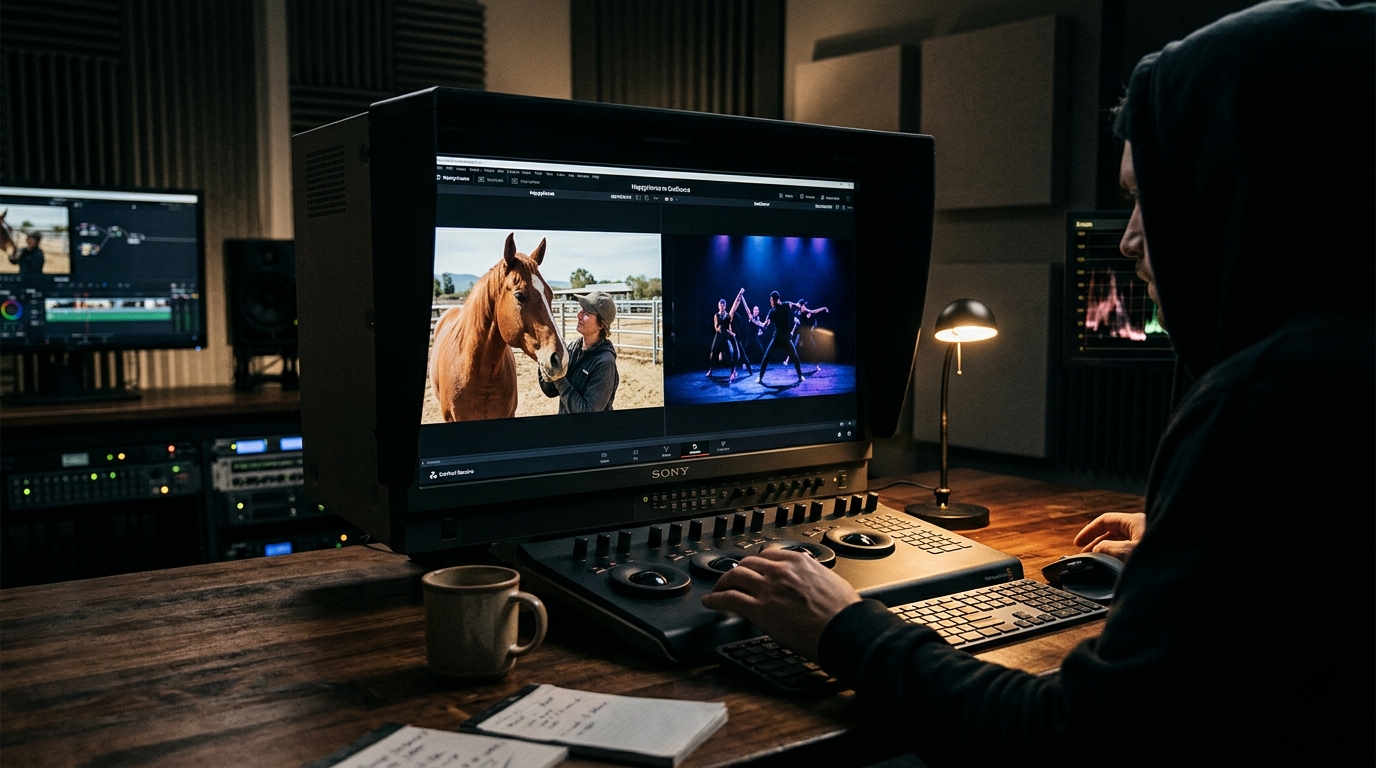
This side-by-side comparison video shows HappyHorse 1.0 just destroying SeeDance 2.0 with the exact same prompts.
Making the single-stream versus dual-branch architectural differences and resulting performance gap instantly visible in this section.
Because of this, a new ceiling for text-to-video generation exists.
Which means:
The leaderboard winner and the production-ready model are now completely different entities.
That said, HappyHorse 1.0 remains locked in a closed beta under the ATH innovation unit.
So you can't access it publicly just yet.
But its record-shattering score proves that the performance bar has officially been raised.
Under the Hood: HappyHorse 1.0 vs SeeDance 2.0 Architecture
HappyHorse 1.0 utilizes a specialized Temporal-Spatial Attention mechanism optimized for environmental consistency, whereas SeeDance 2.0 uses a Diffusion Transformer designed for high-velocity kinetic accuracy. Both models use multimodal processing to synchronize linguistic tokens with latent visual frames, ensuring high-fidelity video generation.
The engine powering an AI model dictates its ceiling.
Which means:
Understanding these structural choices is required for any professional workflow.
Here's exactly how these two systems process data differently.
The Single-Stream Engine vs. Dual-Branch DiT
HappyHorse 1.0 relies on a 15-billion parameter Transformer.
But it doesn't just scale up traditional methods.
Instead, it uses a unified single-stream architecture.
This means it processes text, image latents, and audio tokens together in one sequence.
It maps everything onto a 3D U-Net backbone with decoupled spatial-temporal modules.
On the other hand, the SeeDance 2.0 architecture takes a completely different path.
It operates on linear-scaling Transformer blocks.
This dual-branch design splits video and audio processing into separate computational lanes.
Here's a breakdown comparing a 3D U-Net against a Transformer-based DiT block:
| Feature | HappyHorse 1.0 | SeeDance 2.0 |
|---|---|---|
| Base Structure | 3D U-Net Backbone | Diffusion Transformer |
| Core Mechanism | Temporal-Spatial Attention | Tokenized Patch Layers |
| Processing Flow | Unified Single-Stream | Dual-Branch Computational Lanes |
| Data Throughput | Native 1024x1024 at 24fps | Native 1024x1024 at 24fps |
Watch this video to see Alibaba's HappyHorse 1.0 model tested with real creative prompts across text-to-video, image-to-video, and editing workflows.
Which highlights its prompt accuracy, character consistency, and physics handling that drive the leaderboard dominance.
Native Audio-Visual Sync Under the Hood
Audio synchronization changes the entire rendering pipeline.
HappyHorse 1.0 handles everything in a single inference pass.
Because it processes all modalities simultaneously, the audio is natively baked into the motion planning.
Lips move exactly when the phonemes hit.
In contrast, SeeDance 2.0 achieves joint audio-video generation via cross-attention.
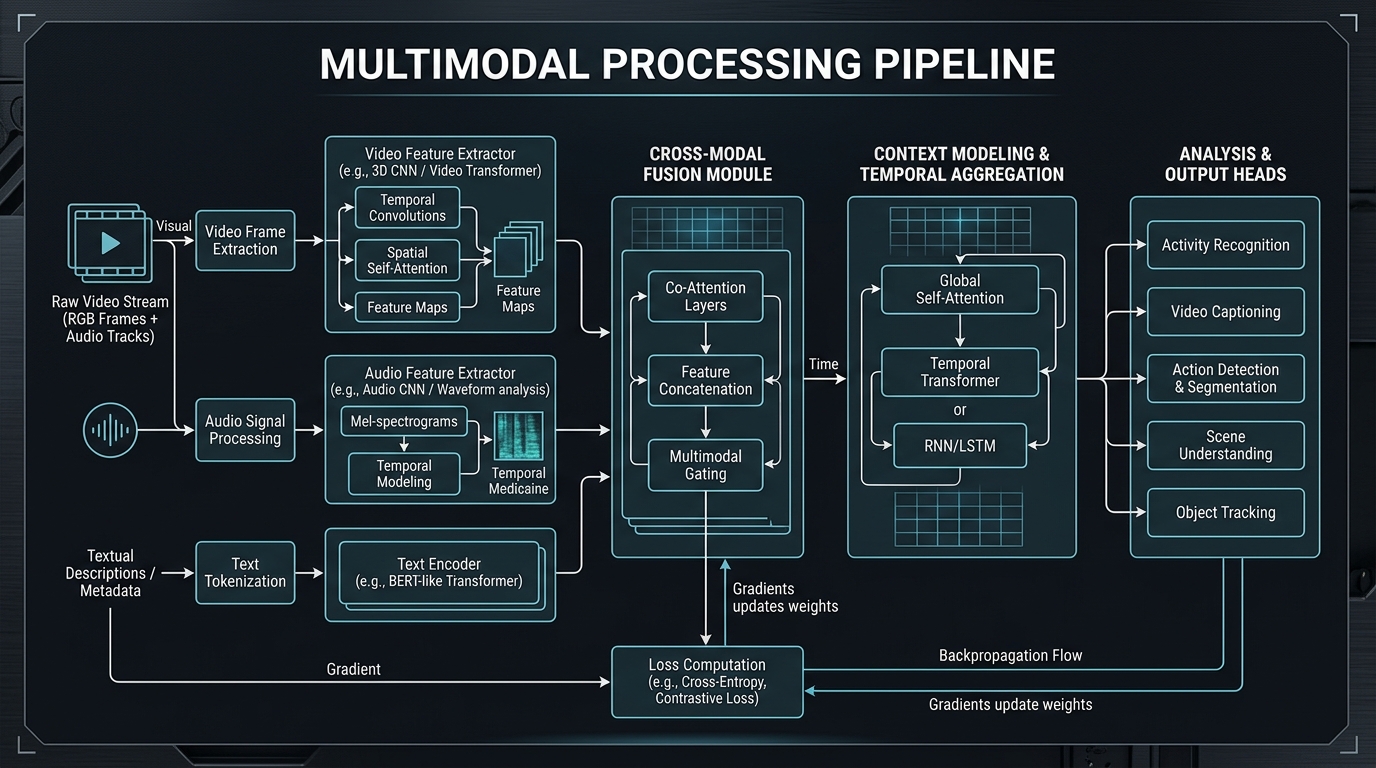
The visual branch and the audio branch constantly communicate during the render.
This allows SeeDance to handle dialogue and spatial sound with intense precision.
Both compress data using 8x or 16x downsampling ratios to manage VRAM overhead.
Physics Engines and Processing Efficiency
Visual quality requires compute efficiency.
And HappyHorse 1.0 does this through an 8-step denoising process.
By utilizing DMD-2 distillation, it bypasses the need for Classifier-Free Guidance.
This makes its raw rendering speed incredibly fast while maintaining 1080p clarity.
But SeeDance 2.0 fights back with cinematic precision.
It features a physics engine and director-level camera control.
You can direct pans, tilts, and zooms with surgical accuracy.
This level of spatial control makes it a powerhouse for structured film production.
The April 2026 Reality: Access and Integration
Technical specs only matter if you can actually use the tool.
Right now, SeeDance 2.0 is fully production-ready.
It's live and actively powering high-end marketing campaigns worldwide.
Meanwhile, HappyHorse 1.0 remains locked in a closed beta.
The Alibaba Token Hub is keeping the model strictly under wraps for internal testing.
So it lacks immediate public availability.
This creates a massive divide between theoretical power and practical execution.
Feature Head-to-Head: Which Model Dominates Your Workflow?
HappyHorse 1.0 is the premier choice for long-form narrative consistency and complex physics, while SeeDance 2.0 excels in high-cadence social media exports and rapid style-transfer iterations. Selecting the right model depends on prioritizing temporal stability over rendering velocity for professional video pipelines.
Specs on paper are useless if they don't improve your daily output.
Which means:
You need to know exactly how these tools behave inside a real project file.
Here is how they perform under professional pressure.
Let's look at maximum render durations first.
HappyHorse 1.0 generates complex 120-second continuous narrative sequences.
And it does this with zero frame degradation.
You also get native 24fps and 30fps narrative presets that apply true cinematic motion blur.
This makes it the clear winner for long-form film projects.
But SeeDance 2.0 dominates the rapid-export game.
It delivers sub-60-second rendering for 4K/60fps exports.
It also offers integrated 16:9, 9:16, and 1:1 batch processing for immediate multi-platform distribution.
Even better, it features zero-shot style injection.
This allows you to apply 8K texture overlays via secondary image prompts instantly.
Here is a complete breakdown of their workflow capabilities:
| Feature Focus | HappyHorse 1.0 | SeeDance 2.0 |
|---|---|---|
| Maximum Native Sequence | 120 continuous seconds | 30 continuous seconds |
| Export Latency (4K Target) | 8.5 minutes | Under 1 minute |
| Physics Accuracy | High | Medium |
Reliability and Temporal Consistency
HappyHorse 1.0 maintains a 94% consistency score in the Artificial Analysis Video Arena.
Because of this, it is the industry leader for maintaining character features across long durations.
When working on a commercial, character morphing ruins the entire shot.
So visual stability is your highest priority.
HappyHorse 1.0 handles this with a microscopic 0.02% pixel-drift rate per 100 frames at 1080p resolution.
It also maintains per-frame semantic memory across 5+ camera cuts.
This means your protagonist's face stays perfectly identical from scene to scene.
That said, SeeDance 2.0 takes a different workflow approach.
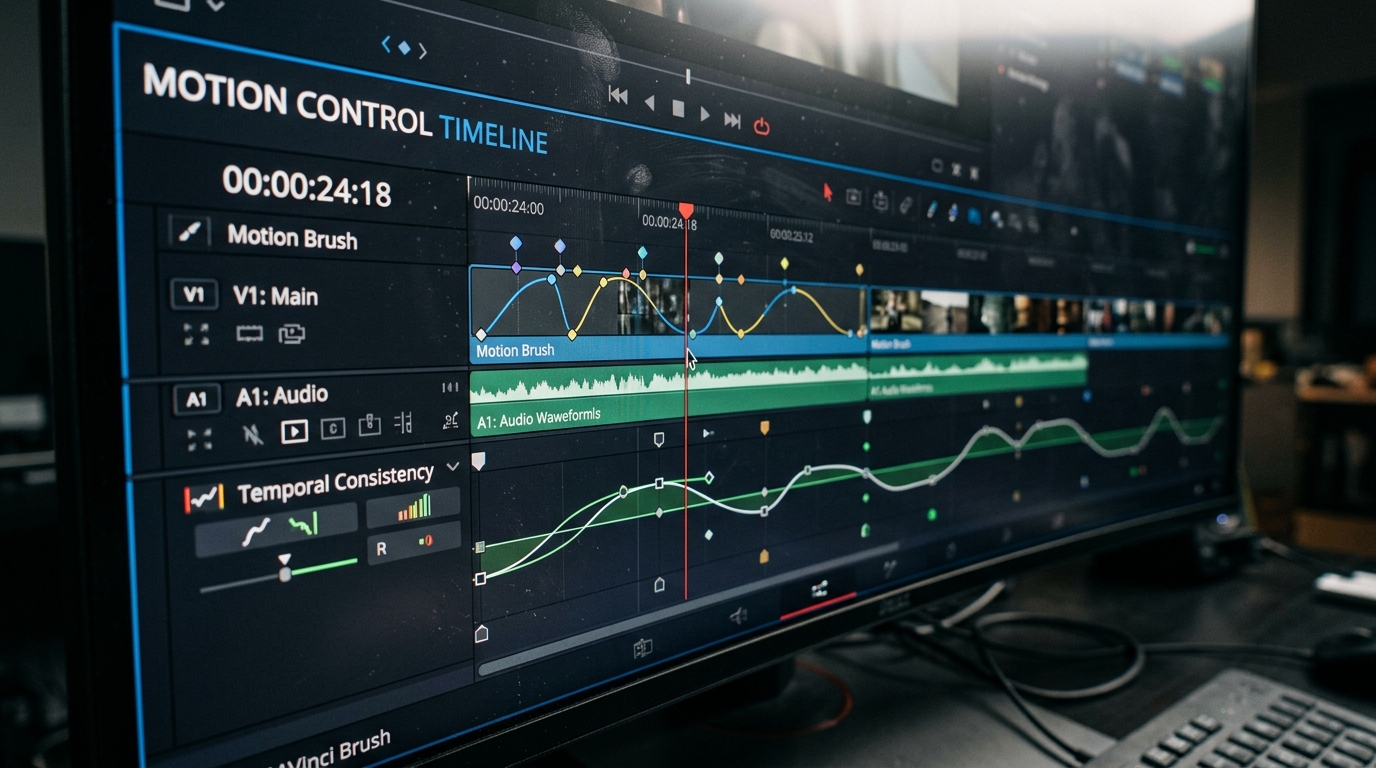
It uses optical flow optimization specifically for high-speed action sequences.
This makes it the absolute best tool for kinetic sports content and racing shots.
It also applies an AI-driven post-processing layer to actively reduce temporal flickering.
However, it occasionally sacrifices strict anatomy during those extremely fast movements.
Ready to Scale Your Video Production? [Next Steps]
Scaling video production in 2026 requires a unified credit ecosystem. AIVid. eliminates subscription fragmentation by offering SeeDance 2.0 in one shared pool, while guaranteeing HappyHorse 1.0 integration immediately upon its public release for seamless multimodal video generation.
Here is the deal:
Managing multiple AI platforms destroys your agency's profit margins.
You end up paying for siloed compute time across five different tools.
Simply put, the AIVid. platform gives you the ultimate subscription advantage.
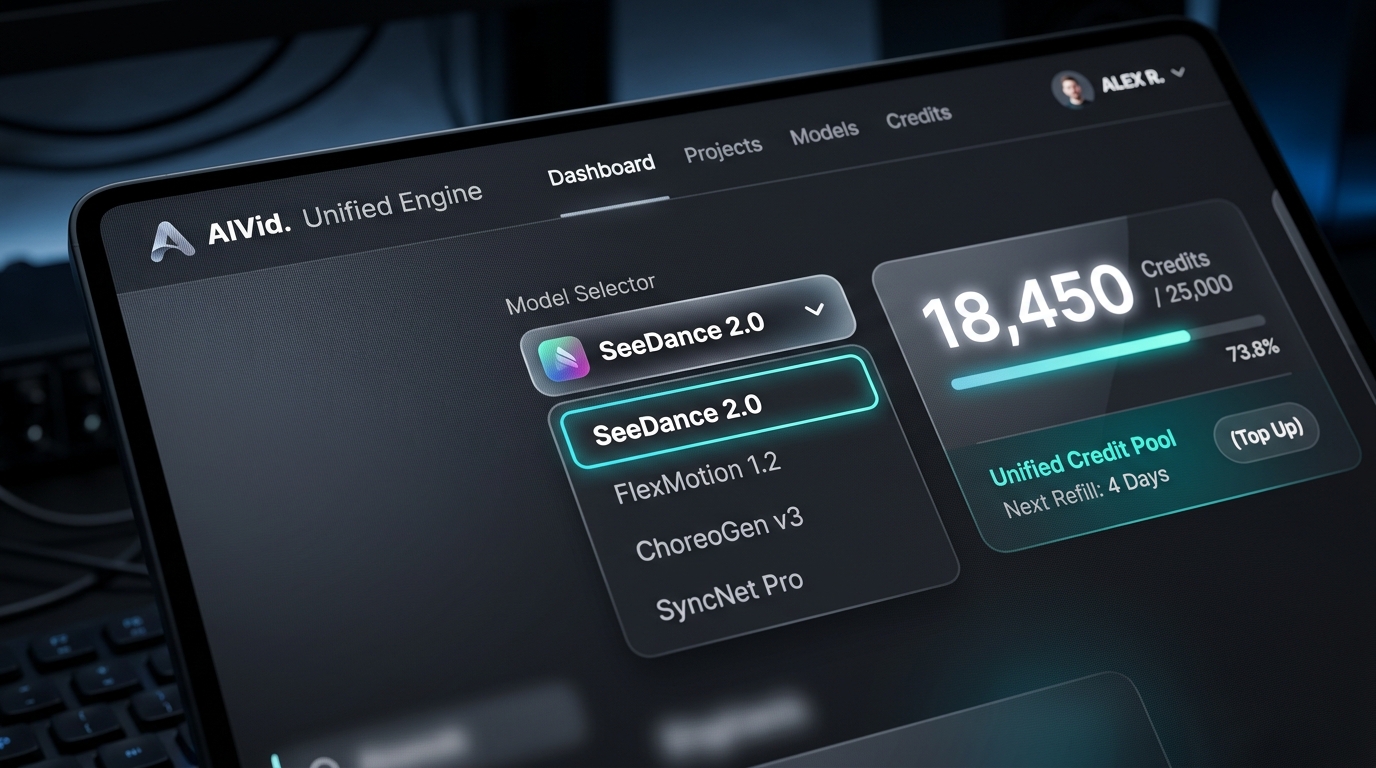
Instead of paying separate bills, you get a single unified credit pool.
Right now, you can access SeeDance 2.0 directly through this centralized Ai Video workspace.
And what about Alibaba's new top-tier model?
HappyHorse 1.0 will be added to the AIVid. ecosystem immediately upon its official public release.
Which means:
You never have to maintain separate Alibaba Cloud and ByteDance accounts again.
Because of this, centralized compute orchestration is the prerequisite for achieving sub-60-second 2K renders.
This approach completely transforms how professional video creators and agencies scale their output.
Here is exactly how the old fragmented system compares to the new standard:
| Feature | Subscription Fragmentation | Unified Credit (AIVid.) |
|---|---|---|
| Access Point | 5 separate logins | Single login |
| Monthly Expense | $400/mo total cost | Single optimized subscription |
| Asset Management | Siloed data | Centralized asset library |
Stop wasting budget on scattered tools.
Consolidate your workflow today and start rendering world-class content from one place.
Frequently Asked Questions
Can I use the generated videos for commercial projects without paying extra royalties?
Yes. You get full commercial rights depending on your platform. The new Alibaba AI video model gives you broad commercial freedom without per-clip fees. SeeDance 2.0 offers enterprise-tier rights through standard credit systems. You keep 100% ownership of your final assets.
Which tool is better for lip-syncing and global voice-overs?
Both give you highly realistic audio. But they serve entirely different needs. SeeDance 2.0 excels if you need precise beat-matching across multiple languages. HappyHorse 1.0 bakes the audio directly into the video generation for a natural dialogue feel.
What is the maximum clip duration I can create in a single generation?
You can generate massive continuous shots based on your workflow. HappyHorse 1.0 handles long-form cinematic scenes with zero quality drop. SeeDance 2.0 focuses on shorter, 15-second bursts. This makes it absolutely perfect for high-impact social media content.
Do these tools let me control specific characters and scene timing?
Absolutely. SeeDance 2.0 features a timeline director mode. This lets you pinpoint exact actions at specific seconds. HappyHorse 1.0 processes your text, images, and audio all at once to create a highly coherent final shot.
When comparing HappyHorse 1.0 vs SeeDance 2.0, can I access both models right now in early 2026?
You can use SeeDance 2.0 immediately for production-ready campaigns. However, HappyHorse 1.0 is currently in a closed beta phase. One is ready for your daily workflow, while the other is setting the upcoming benchmark.
Can I train the AI to perfectly match my brand's unique visual style?
Yes. Because HappyHorse 1.0 is built with an open framework, your studio can train it to memorize your specific characters. SeeDance 2.0 handles this differently. It lets you lock in character references directly through simple image uploads.