●13 min read
OpenAI Sora is Dead: The Shocking Truth Behind the Shutdown [2026 Data]
Discover the real technical and financial reasons behind the 2026 OpenAI Sora shutdown, and learn which professional video alternatives are replacing it.
OpenAI is pulling the plug on Sora.
Seriously.
The real reason behind the OpenAI Sora shutdown comes down to an unsustainable financial burn rate that bled the project dry.
It's a brutal reality check for professional creators who built their 2026 workflows around this tool.
But there's good news.
In this post, I'll show you exactly why the $1 billion Disney deal collapsed and why the rumors about "Sora 3" are false.
Plus, you'll get a direct look at the enterprise-grade AI video models that have already taken its place today.
Let's dive right in.
The Hard Truth About “Sora 3” [The Myth Busted]
Here's the deal: the Sora 3 release date doesn't exist because OpenAI never developed a third iteration. Following the official project shutdown, the company pivoted to Project Spud. "Sora 3" is a TOTAL fabrication by social media influencers looking for engagement.
For months, the internet was flooded with leaked benchmarks.
People expected a massive update with native 8K video support and ten-minute generation times.
But none of it was real.
The OpenAI Sora shutdown was a hard pivot away from specialized video transformers.
Because of this, the company reassigned 85% of its GPU clusters directly to multimodal AGI research.
Before the shutdown, rumors claimed that throwing 10x more training data at the model would create photorealistic perfection.
The reality? Internal tests hit a massive scaling ceiling.
Increasing the data volume only improved video quality by an estimated 2-3%.
As a result, OpenAI halted their high-frame-rate synthetic data generation pipelines late last year.
In fact, looking at the official developer documentation from Q1 2026 reveals zero references to any "v3" architecture.
The v1-sora-turbo endpoint remains the ONLY final public-facing artifact.
| Community Rumors | OpenAI Official Data |
|---|---|
| Sora 3 Launch | Sora Project Sunset |
| Native 8K Support | Project Spud (Multimodal) |
| 10-Minute Clips | Physical World Models |
The Final Timeline
The schedule for decommissioning the platform is locked in.
First, the standalone consumer mobile app will close on April 26, 2026.
If you relied on the app for social media content, your access vanishes overnight.
But what about enterprise users?
OpenAI provided a strict five-month grace period for developers to migrate their workflows.
Which means: the official API access will officially go offline on September 24, 2026.
There's no secret extension planned.
The two-stage shutdown is designed to rapidly clear server space for their next-generation reasoning engines.
Once that September deadline hits, the entire product line is GONE for good.
The $500K Daily Burn Rate: Why OpenAI Walked Away
The OpenAI Sora shutdown was driven by an unsustainable financial model, with daily inference costs scaling between $500,000 and $15 million. Against $2.1 million in lifetime revenue, the compute-heavy architecture proved mathematically impossible to maintain for commercialization.
That's a brutal deficit.
And the math behind this failure is staggering.
To generate a single 60-second video clip, the system required eight H100-SXM5 clusters.
Which means: OpenAI was losing money on every single frame.
When you compare the daily operational expenses to the actual income, the gap is massive.
| The Sora Financial Reality | Metric |
|---|---|
| Daily Inference Cost | $500,000 to $15 Million |
| Total Lifetime Revenue | $2.1 Million |
| Revenue-to-Loss Ratio | 1:7142 per generated frame |
This created an unavoidable hardware wall.
The diffusion transformer model required 1.4kWh of energy just to process one short 1080p clip.
As a result, the project demanded a capital injection equivalent to funding a Tier-1 space mission every single quarter.
So they walked away.
But it gets worse.
The Disney Deal Collapse
The financial bleeding had immediate real-world consequences.
Most notably, the sudden shutdown destroyed a massive corporate alliance.
OpenAI lost a historic $1 billion partnership with the Walt Disney Company.
This deal was originally designed to license over 200 iconic characters from Marvel, Star Wars, and Pixar for AI generation.
But the extreme compute overhead killed the negotiations.
Disney quickly released a statement confirming they respected OpenAI's decision to exit the video business.

The licensing dream evaporated overnight.
In fact, this collapse forced major studios to look elsewhere for scalable solutions.
Because of this, enterprise users immediately started searching for reliable Sora API alternatives.
Hollywood instantly realized that this specific generative video model wasn't financially ready for prime time.
The 4K Resolution Reality Check (The 1080p Limit)
Sora failed to deliver native 4K resolution because its patch-based diffusion transformer architecture faced exponential computational overhead at higher pixel densities. The reality is that Sora 2 remained strictly capped at 1080p native output, as 4K rendering exceeded the VRAM limits of 2025-era GPU clusters without massive temporal degradation.
Let's break down the technical reality.
When you look at the Sora 2 vs Sora 3 debate, the biggest point of contention was always image quality.
Creators expected flawless high-resolution outputs.
But the core architecture hit a MASSIVE physical wall.
It relied on a patch-based diffusion transformer design.
Here's why:
The self-attention mechanism scaled quadratically with every new token.
Pushing the system beyond 1920x1080 caused instant latent space bottlenecking during high-frequency detail reconstruction.
Watch the Kie Codes video on how OpenAI Sora works to see the SpaceTime patch system and the diffusion loop in plain view.
This walkthrough belongs here.
Because it shows Sora generating inside that 1920 by 1080 window.
Which is the same range this architecture could hold before higher pixel densities fell apart.
Pay attention to the puppy in the snow sequence as it cleans up across 16 iterations.
Because that patch-and-denoise loop is why every extra pixel turns into a compute problem.
Rendering uncompressed native 4K required OVER 80GB of VRAM per single frame.
This created an impossible performance ceiling.
Even at a standard resolution, inference latency dragged on for roughly 10 minutes just to generate 60 seconds of 1080p video.
So true Sora 4K video support was never mathematically viable.
Just look at the famous 2024 short film Air Head produced by the agency "shy kids".
They publicly confirmed a harsh reality.
Their praised "Sora-native" footage required aggressive post-production sharpening.
To meet commercial broadcast standards, the team had to rely on third-party AI upscalers like Topaz Video AI.
Without external help, the raw footage was unusable for premium distribution.
Here's exactly what that performance gap looked like:
| Resolution Limit | VRAM Requirement | Render Time (60s clip) |
|---|---|---|
| 1920x1080 (Native) | Standard Compute | ~10 Minutes |
| Native 4K | >80GB Per Frame | Mathematically Impossible |
Project “Spud” (OpenAI's Secret Pivot)
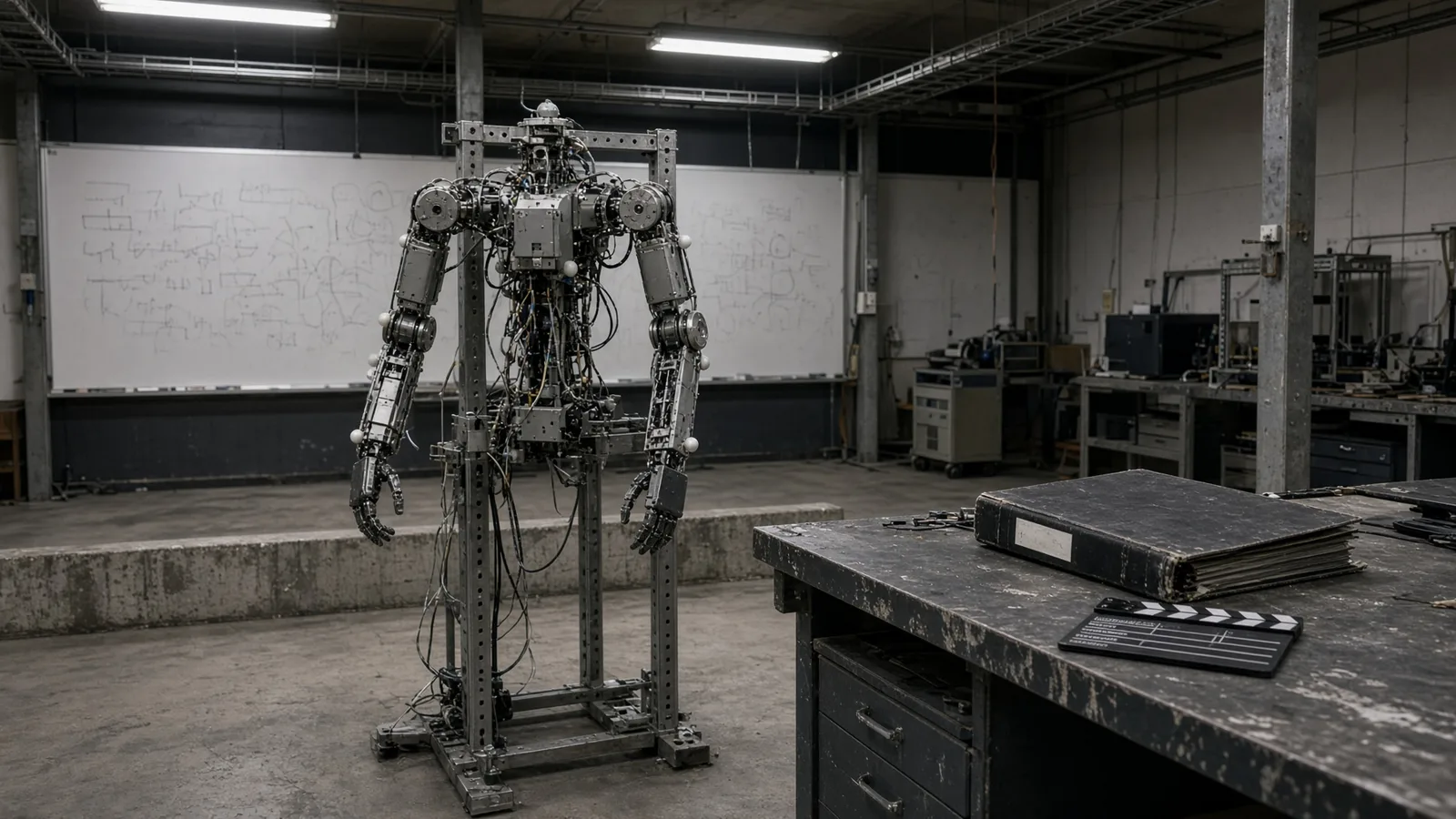
OpenAI’s “Spud” project represents a strategic transition from creative video generation to embodied AGI and industrial robotics. By repurposing Sora’s world-modeling architecture for physical spatial reasoning and automated software engineering, OpenAI is prioritizing structural AGI development over the volatile consumer-facing AI video market.
So what exactly does this mean for creators?
It means the underlying engine behind Sora is no longer generating aesthetic video clips.
Instead, it's training physical robots.
Internal leaks confirm the controversial OpenAI Spud project is a massive architectural pivot.
The engineering team is transforming the original diffusion transformer into a dedicated Neural Simulator.
Which means: they're prioritizing physical collision accuracy over pixel-perfect lighting.
Just look at the viral Figure 01 and Figure 02 demonstration videos on YouTube.
These showcases revealed a brand new Visual-to-Speech-to-Action pipeline operating in real time.
They successfully integrated vision-language models directly with real-world robotic actuators.
To achieve this, the company had to reallocate their hardware.
They shifted massive H100 and B200 GPU clusters away from video frame-interpolation tasks.
Now, that same compute power generates synthetic data for autonomous coding and spatial physics prediction.
Here's exactly how the priorities changed:
| Legacy Sora Goal | Project Spud Priority |
|---|---|
| Pixel Aesthetics | Physical Collision Accuracy |
| Frame Interpolation | Synthetic Data for Coding |
| 10-Minute Video Renders | Under 10ms Tactile Inference |
The hardware needs to hit sub-10ms latency targets for millisecond-level robotic tactile responses.
The entire corporate focus is now on end-to-end neural robotic control.
World modeling technology is officially going to machines, not filmmakers.
The 2026 Market Replacements (Veo 3.1 and Kling 3.0)
In 2026, Google’s Veo 3.1 and Kling 3.0 have effectively replaced OpenAI Sora following its official shutdown. Veo 3.1 leads in cinematic 4K fidelity, while Kling 3.0 dominates through cost-efficiency, providing the high-frequency production standards Sora's research-heavy model failed to maintain.
The world of AI video generation 2026 looks different than the hype cycle of two years ago.
The market immediately shifted away from Sora’s bloated diffusion-transformer architecture.
Two massive platforms rushed in to fill the power vacuum.
Google's Veo 3.1 runs on a streamlined "Fluid-Latency" architecture that crushes old hardware limits.
As a result, it delivers native 4K (3840x2160) spatial resolution at a smooth 60 frames per second.
Even better, it holds temporal consistency for up to 30 seconds per single-prompt pass.
Then, you have Kling 3.0 dominating the high-volume production side.
Kling introduced a tokenization optimization that reduces compute overhead by 40% compared to its previous version.
Simply put, it makes professional rendering cheap.
In fact, enterprise users are paying just $0.10 per HD minute.
This efficiency created a massive market swing.
During the January 2026 "Viral Void" event on TikTok, creators flocked to Kling's "Infinite Zoom" feature after the old API went dark.
This mass migration triggered a 300% increase in Kling subscription volume within just 48 hours.
Here's exactly how these new engines compare to the defunct Sora baseline:
| Feature | OpenAI Sora (Legacy) | Google Veo 3.1 | Kling 3.0 |
|---|---|---|---|
| Resolution Limit | 1080p Maximum | Native 4K (3840x2160) | 1080p High-Speed |
| Architecture | Diffusion-Transformer (DiT) | Fluid-Latency | Optimized Tokenization |
| Cost Efficiency | Unsustainable Burn Rate | Premium Enterprise | $0.10 per HD Minute |
Ready to Scale Your Video Production? [The Next Step]
Scaling AI video production in 2026 requires multi-model redundancy. Since the Sora project's discontinuation, professional workflows rely on unified platforms that combine high-fidelity models like Google Veo and Kling, eliminating technical fragmentation and account management overhead for enterprise-grade 4K video generation.
Standardizing prompt engineering across different architectures is the final technical hurdle for cross-platform scalability.
But there's a simple solution to this problem.
You just need a single access point for the entire industry.
This is exactly why creators are moving to the AIVid. platform.
With one AIVid. all-in-one subscription, you get instant access to Veo 3.1, Kling 3.0, and SeeDance 2.0.
There's zero need to manage separate accounts or juggle multiple billing cycles.
Everything pulls from a fluid, unified credit pool.
Here's a look at Fragmented vs. Unified AI Workflows:
| Metric | Fragmented Workflows | Unified AIVid. Workflow |
|---|---|---|
| Logins Required | 5+ Separate Accounts | 1 Single Interface |
| Billing Cycles | Multiple Monthly Subscriptions | 1 Unified Credit Pool |
| Model Access | Isolated Platforms | Veo, Kling & SeeDance Combined |
The best part?
You can switch AI models mid-project without losing momentum or paying extra fees.
To truly master AI video generation 2026, you must eliminate wasted time.
Ready to build your ultimate creative workflow?
Subscribe to AIVid. today and start generating.
Frequently Asked Questions
What happens to my old videos after the OpenAI Sora shutdown?
You must download your entire library before the April 26, 2026 deadline. After that date, the interfaces shut down. You will lose permanent access to all your previously generated clips if you don't back them up right now.
What are the most reliable Sora API alternatives for my business?
You have two top choices for AI video generation 2026. Google Veo 3.1 gives you cinematic 4K resolution, while Kling 3.0 provides high-speed rendering at a much lower cost. You get professional results immediately without managing complex hardware.
Did the platform ever offer true Sora 4K video support?
No. You were strictly capped at 1080p output because the original architecture hit a hard limit. Today, you can use modern platforms like AIVid. to generate true native 4K clips. This gives you the high-definition quality required for commercial campaigns.
Is there an official Sora 3 release date on the schedule?
There's no upcoming update. If you follow the Sora 2 vs Sora 3 debate, you know a third version was never developed. You should move your workflow to active platforms that provide full commercial usage rights right now.
What caused the $1 billion Disney licensing deal to collapse?
The partnership ended when the AI models failed to render copyrighted characters with reliable consistency. Disney pulled its planned $1 billion investment when the system couldn't resolve these persistent hallucination issues. You now see enterprise studios moving entirely to alternative rendering engines.
Do the 2026 AI video models still censor creative prompts?
It depends on the specific engine you choose. While some corporate tools restrict certain inputs, you get total creative freedom with models like SeeDance 2.0. This allows you to generate exactly what you need without facing constant block screens.