

Written by Oğuzhan Karahan
Last updated on Aug 28, 2026
●11 min read
SeeDream 5.0 Lite Review: The New Reasoning-First Standard [2026]
SeeDream 5.0 Lite is redefining AI image generation with a Chain of Thought architecture that finally understands logic, physics, and bilingual typography.
Here is exactly how it compares to Midjourney v8.
![SeeDream 5.0 Lite Review: The New Reasoning-First Standard [2026]](/_next/image?url=https%3A%2F%2Fcdn.creatide.ai%2Fassets%2Fuploads%2Fimages%2F2026%2F03%2FmUQmNd641M3zJQFfnzK5yXEF.jpeg&w=3840&q=75)
It's incredibly frustrating.
You write the perfect prompt for a marketing campaign, only to get morphed characters and messy layouts.
Traditional pattern-matching AI just guesses at what looks good.
But there's good news.
In this SeeDream 5.0 Lite review, I'm going to show you exactly how this engine operates like a true creative assistant.
We integrated this specific reasoning-first model directly into AIVid.
This unified platform houses the world's top generative models, letting you execute precise multi-reference fusions without juggling different subscriptions.
The best part?
You are about to see a definitive, technical breakdown of its new Chain of Thought architecture.
Let's dive right in.
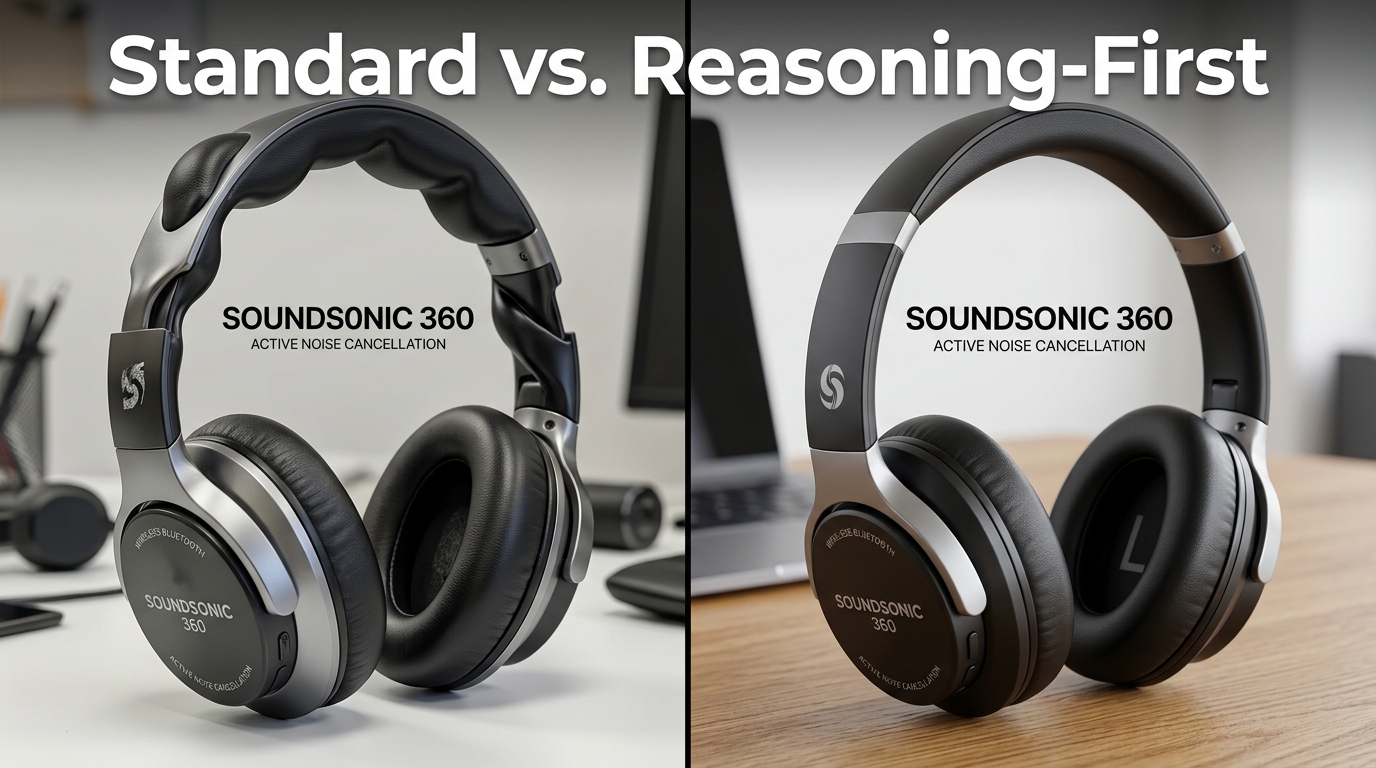
How "Reasoning-First" AI Actually Works (The CoT Framework)
Chain of Thought (CoT) in AI image generation is a multi-step inferencing framework where models calculate physical laws, spatial relationships, and lighting logic before rendering pixels. SeeDream 5.0 Lite evaluates this physical plausibility pre-generation, operating at a flat enterprise rate of $0.035 per image.
Legacy AI models act like simple pattern matchers.
They read your text and immediately start plotting pixels based on visual averages.
The result?
They constantly fail at basic physics.
SeeDream 5.0 Lite completely changes this approach.
It introduces a massive shift from pattern-matching diffusion to a strict reasoning-first AI architecture.
This engine utilizes a sequential multi-stage CoT parsing system.
Semantic intent is processed first.
Then comes the physics logic.
Lighting is calculated next.
Finally, pixel synthesis begins.
Here is exactly how the two architectures compare:
| Architecture Type | Processing Sequence | Core Limitation or Advantage |
|---|---|---|
| Standard Diffusion | Direct Prompt-to-Pixel | Blind to real-world physical laws. |
| SeeDream 5.0 Lite CoT | Semantic Intent ➔ Physics Evaluation ➔ Lighting Logic ➔ Pixel Synthesis | Calculates spatial logic before generating. |
This pre-generation physics evaluation engine is what permanently prevents visual paradoxes.
Watch this video to see the intelligent logical reasoning in Seedream 5.0 Lite.
It actively calculates complex occlusions, lever balances, and gravitational plausibility.
For example, imagine you prompt for a heavy iron weight resting on a thin glass table.
Legacy models would just draw the two items touching.
SeeDream 5.0 Lite calculates the mass.
It knows the glass should bend or shatter, and it renders the scene accordingly.
It does not just guess what objects look like.
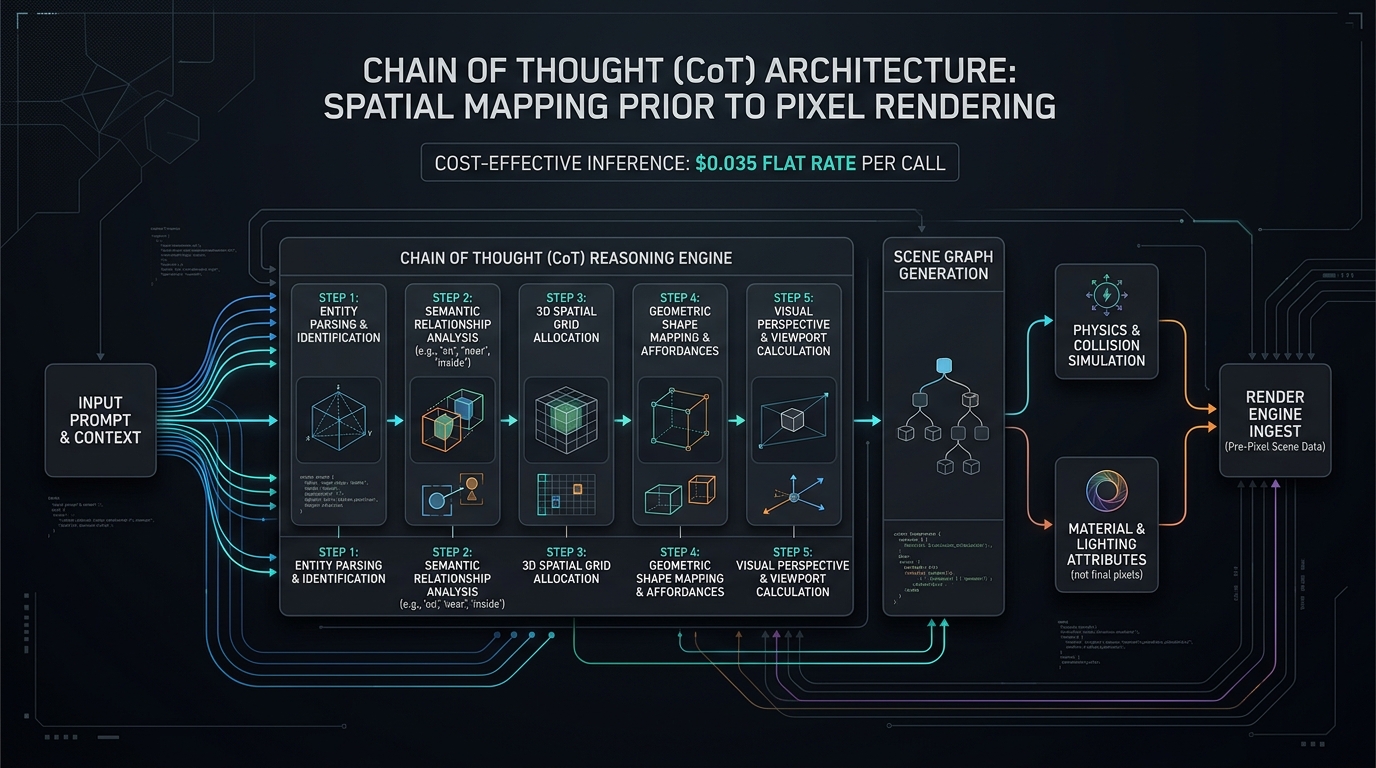
It actually understands how they physically interact.
Because this reasoning layer is so advanced, it features a completely automated prompt-to-parameter pipeline.
The 5.0 API natively bypasses manual controls like guidance scales and negative prompts.
You just provide natural language instructions.
The model handles the structural math autonomously.
This level of structural intelligence didn't appear out of nowhere.
In February 2026, the Motion Picture Association filed a massive copyright lawsuit against ByteDance.
The MPA accused the tech giant of scraping massive troves of Hollywood visual media.
Why?
To train the exact "world model" physics capabilities that drive these CoT engines.
Controversy aside, the resulting architecture is undeniably powerful.
In fact, it is setting a new benchmark for structural accuracy across the entire industry.
You can see similar physics battles playing out in the Sora 2 vs Veo 3.1: The Definitive Comparison.
But for static commercial images, SeeDream 5.0 Lite stands alone.
Which brings us to a highly specific commercial advantage.
While the CoT framework resolves spatial inconsistencies natively at the physics layer, it solves another major headache.
This exact same underlying Diffusion Transformer architecture is what enables pixel-perfect typographic alignment in the resulting renders.
What is Real-Time AI Image Generation? [The Live Web Feature]
Real-time AI image generation bypasses traditional knowledge cutoffs by actively retrieving live web data during the rendering process. This integration prevents hallucinations, ensuring culturally relevant events and trending products are visually accurate while outputting natively in crisp 4K resolution.
Most AI models have a massive blind spot.
They rely entirely on static training data.
Which means:
If a product launched yesterday, the AI has no idea what it looks like.
It just guesses.
And that leads to embarrassing visual hallucinations.
But live web search solves this natively.
This architecture uses a Real-Time Retrieval-Augmented Generation (RAG) pipeline.
Before rendering a single pixel, it scrapes the live internet.
It pings search trends to gather current, real-world reference data.
This gives the model instant temporal context.
It actually knows what happened this morning.
Because of this, you can generate perfectly accurate visuals of breaking news or viral trends.
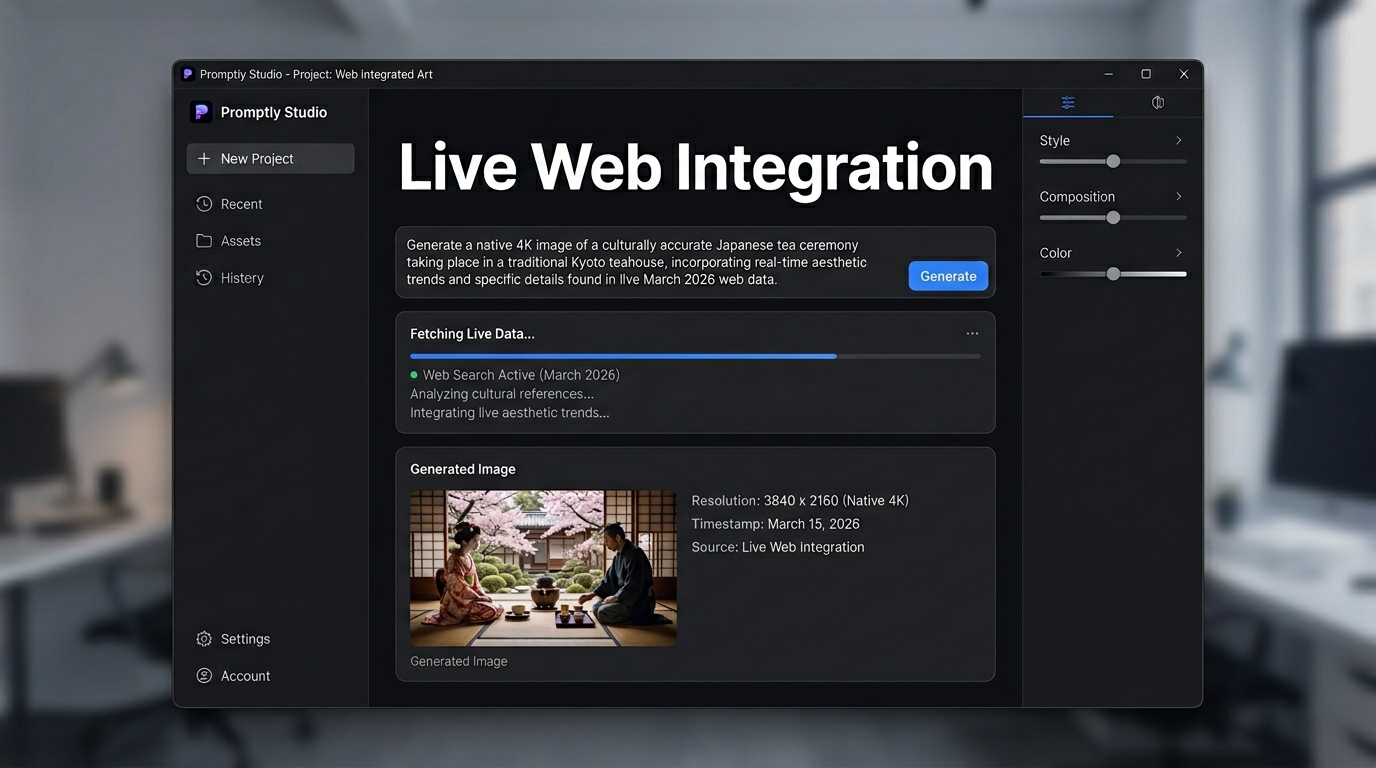
And it generates the final output scaled to native 3840 x 2160 (4K).
No secondary upscaling passes required.
That's why this exact technology recently disrupted the industry.
In February 2026, Google DeepMind launched " Nano Banana 2" (Gemini 3.1 Flash Image).
This model went completely viral across tech communities.
Why?
Because it successfully rendered up-to-the-minute news events by scraping live internet data.
This parallel processing framework completely redefines commercial workflows.
Here's exactly how this live search-to-image architecture operates:
| Processing Stage | System Action | Final Result |
|---|---|---|
| Prompt Entry | Parses natural language and time-stamped modifiers. | Identifies the exact temporal context needed. |
| Live Web Index Query | Bypasses static parameter limits to scrape the live web. | Gathers current cultural and visual data. |
| Temporal Data Validation | Anchors the prompt to verified internet trends. | Eliminates AI visual hallucinations. |
| Native 4K Generation | Synthesizes the final image using parallel processing. | Outputs a crisp 3840 x 2160 visual. |
Once the system successfully retrieves and validates this live web data, it moves to the next phase.
The underlying engine then processes this raw information through a reasoning-first architecture to construct the final image layout.
The 3-Step Multi-Reference Workflow (Inside AIVid.)
AIVid. centralizes complex multi-image prompting by combining up to 14 reference images simultaneously into a single workflow. Its multi-reference fusion engine anchors facial structures, lighting, and style across scenes, enabling creators to execute commercial-grade storyboards in three precise steps.
Creating consistent characters across multiple scenes used to be a nightmare.
You would upload a reference image, and the AI would immediately degrade the subject's identity.
Not anymore.
During my hands-on SeeDream 5.0 Lite review, I tested its highly specialized multi-reference capabilities.
This model utilizes an isolated feature preservation pipeline.
Which means:
It completely prevents identity degradation across sequential frame generation.
You can actually assign up to 4 dedicated character slots and 10 object or style slots at the exact same time.
This gives you unprecedented control over the final composition.
Here is the exact commercial blueprint to execute this inside the AIVid. interface.
The 3-Step Multi-Reference Blueprint
- Omni-Reference Anchoring
Upload your base subject for an absolute geometry and material lock. This establishes the foundational facial structure before rendering begins.
- Parameterization
Assign exact weight ratios to balance the character against the environment. This ensures the subject does not override the stylistic instructions of your main prompt.
- Iterative Fusion
Run a draft-mode spatial layout preview to verify object placement. Once the positioning is verified, push the final render to a native 3K or 4K output.
This exact sequence is already driving massive commercial results.
Watch this FLORA © tutorial to see multi-reference image connections with up to 10 references.
In February 2026, tech creator Mangidik went completely viral on YouTube.
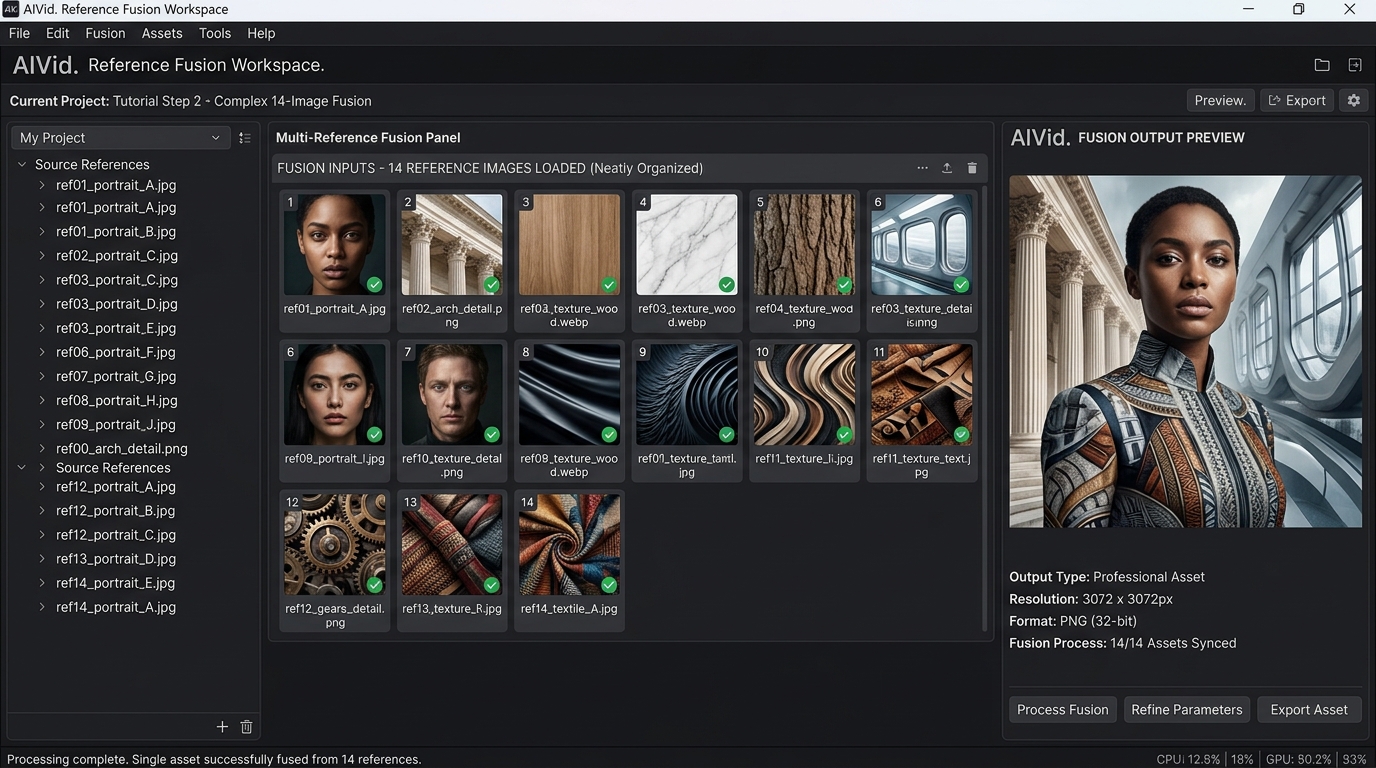
He revealed that 100% of his channel's high-CTR thumbnails were generated using this exact multi-reference architecture.
By leveraging a master prompt workflow, he locked commercial elements flawlessly.
He consistently generated native 16:9 graphics at crisp 3K resolution.
And he did it without ever opening Photoshop.
Because the engine processes these inputs simultaneously, it acts as a highly disciplined command center.
But to replicate this success, you need precise control over your extraction variables.
Here are the optimal settings for maintaining flawless AI character consistency:
| Parameter Focus | Recommended Weight | Commercial Result |
|---|---|---|
| Character Reference | 0.8 | Preserves strict anatomical identity without ruining environmental lighting. |
| Style Reference | 0.6 | Applies the aesthetic globally without overwriting the subject's attire. |
| Object Reference | 0.9 | Forces the exact geometry of a product into the generated scene. |
This setup locks your static visual assets into a rigid, repeatable format.
While a 14-image reference workflow successfully anchors these fixed storyboards, translating them into fluid motion is a different beast entirely.
That requires a dedicated temporal generation framework, which you can explore in SeeDance 2.0: The Definitive Guide for 2026.
Ready to Scale Your Asset Pipeline?
Scaling enterprise asset pipelines requires unified multi-model orchestration rather than fragmented software ecosystems. Consolidating API access, concurrent GPU batching, and cryptographically tracked commercial rights into a single operational framework eliminates subscription fatigue and accelerates your high-volume production deliverables.
If there's one major takeaway from this SeeDream 5.0 Lite review, it's that piecing together different AI subscriptions is completely obsolete.
Seriously.
You don't need to manage isolated rendering silos to run a professional agency.
In fact, juggling separate logins actively drains your production budget.
Look at the March 2026 Product Hunt launch of Secret Sauce 3D.
This internal studio tool went viral for one highly specific reason.
It completely bypassed the extreme multi-subscription bottlenecks crushing modern design teams.
This is exactly why we built AIVid.
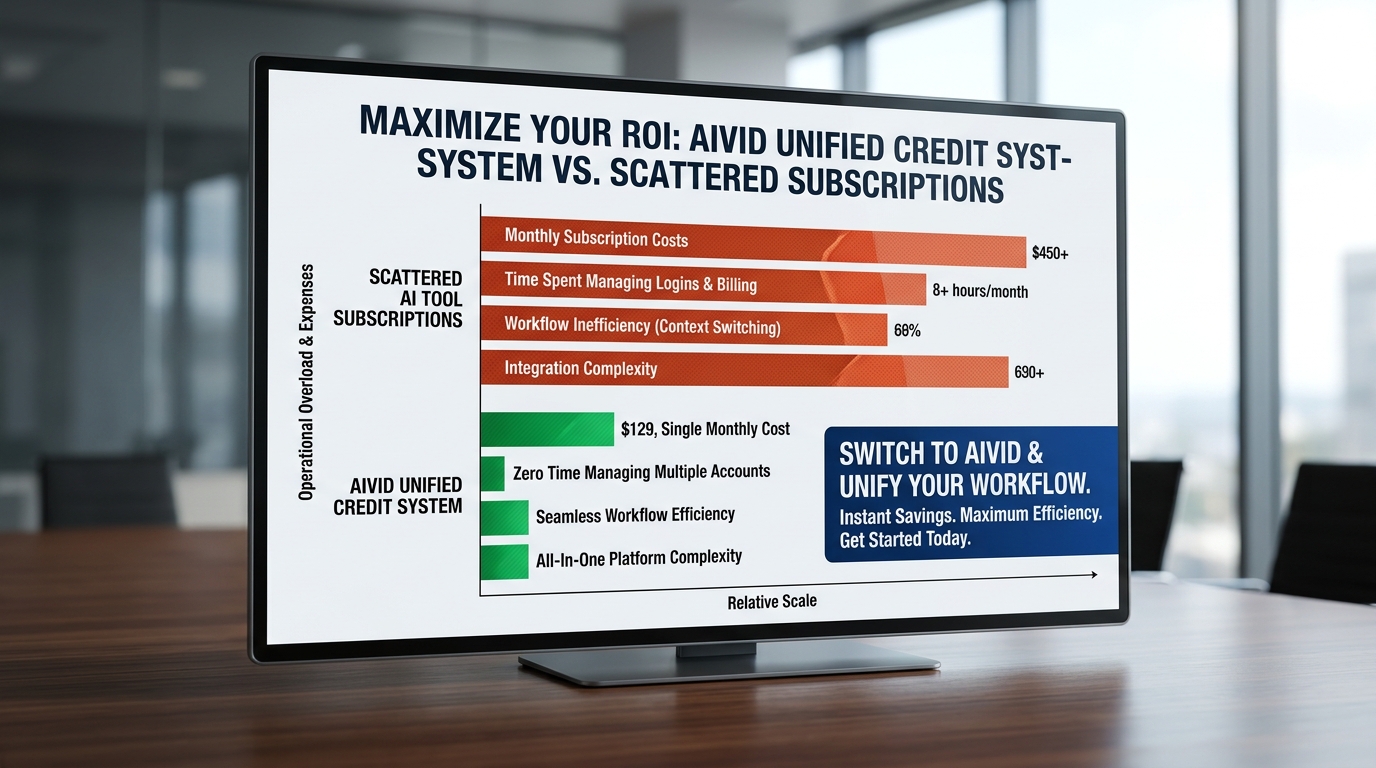
Our platform operates on a proprietary Unified Credit System.
Which means:
You have zero requirement for disjointed SeeDream, Google, or Flux subscriptions.
One centralized credit pool grants you direct REST API token optimization across every top-tier model.
It's the ultimate Midjourney v8 alternative for high-volume commercial scaling.
Here's exactly how this framework neutralizes production bottlenecks:
| Fragmented Subscriptions vs. Unified Operations | Standalone API Deployment | AIVid. Unified Architecture |
|---|---|---|
| Model Access | Disjointed accounts for SeeDream, Google, and Flux. | Single-source centralized login. |
| Render Speed | Prone to isolated API throttling. | Sub-second inference latency for batch rendering. |
| Licensing | Fragmented legal indemnification. | Cryptographic watermark injection. |
But there's one final operational advantage.
Legal protection.
Every single paid tier inside AIVid. includes full commercial generation rights.
We embed cryptographic watermark injection directly into your renders for instant license verification.
So audit your team's monthly GPU rendering hours right now.
Calculate your exact fragmentation tax.
Then, shift your workflow to a centralized multi-model engine to instantly accelerate your content delivery.
Frequently Asked Questions
What is real-time AI image generation?
It actively retrieves live web data during rendering to avoid hallucinations and ensure culturally relevant visuals in 4K resolution. This approach makes outputs current and contextually precise compared to models using only static training data.
How does the multi-reference workflow work?
By combining up to 14 reference images simultaneously, it anchors facial structures, lighting, and style across scenes. This enables consistent characters and storyboards in three precise steps for commercial-grade results.
What are the benefits of real-time AI image generation?
It prevents hallucinations with live web data integration. Creators gain cultural relevance and 4K native outputs. The technology supports dynamic workflows that static models cannot match.
How does it support AI character consistency?
Multi-reference fusion keeps identities stable by using multiple anchors at once. This avoids visual drift in multi-scene projects. It's essential for maintaining brand standards in storytelling.
Can real-time AI image generation scale for enterprise use?
It consolidates API access and batch processing into a unified framework. This reduces subscription fatigue and speeds up high-volume deliverables. Cryptographic tracking ensures secure commercial rights usage.
What limitations should you check for real-time AI image generation?
Consider reference image count limits and hardware requirements. Test with your specific use case to verify workflow fit. The live data feature shines for trending topics but requires compatible setups.
Is real-time AI image generation suitable for beginners?
Yes, the three-step process simplifies complex multi-image prompting. Focus on creative choices while the system handles consistency. It's accessible for non-technical creators building storyboards.
![SeeDream 5.0 vs SeeDream 4.5: The Ultimate Blueprint [2026]](/_next/image?url=https%3A%2F%2Fcdn.creatide.ai%2Fassets%2Fuploads%2Fimages%2F2026%2F04%2FSKKCijeBVr5tFtlk05BS4Xle.jpeg&w=3840&q=75)


