
Written by Oğuzhan Karahan
Last updated on Aug 28, 2026
●8 min read
Wan 2.7 Release: The Multimodal AI Director [March 2026 Specs]
Alibaba's Wan 2.7 is launching in March 2026, bringing 4K resolution, 30-second sequences, and native lip-sync to AI video.
Here is the exact breakdown of its new multimodal features.
![Wan 2.7 Release: The Multimodal AI Director [March 2026 Specs]](/_next/image?url=https%3A%2F%2Fcdn.creatide.ai%2Fassets%2Fuploads%2Fimages%2F2026%2F04%2FvkgRjFslqyfSqUbv9sEctKEy.jpeg&w=3840&q=75)
I'm talking about the highly anticipated release of Wan 2.7.
While Wan 2.6 gave us incredible temporal consistency, it still lacked deep directorial control.
This new version fixes that completely.
It acts as a true multimodal AI director.
You can finally use instruction-based video editing with natural language to tweak specific actions.
Need to lock down your starting and ending shots?
You now have exact first and last frame keyframing control.
Combine that with native audio AI video capabilities and multilingual lip-sync, and you have a complete production studio.
But the best part?
You don't need a massive local GPU setup to run an AI video generator 4K pipeline.
When the model officially launches later this month, AIVid. will be the only unified creative engine where you can access it on day one.
No waitlists.
No expensive hardware upgrades.
Just log in, use your unified credit system, and start producing.
Let's break down exactly what this update means for your workflow.
What Is Wan 2.7?
Wan 2.7 is a next-generation video diffusion model that leaves Wan 2.6's 1080p capabilities behind. It delivers true 4K cinematic fidelity and pushes continuous generation limits to an unprecedented 20 to 30 seconds per prompt.
The leap from the previous version is entirely structural.
Older iterations struggled to maintain physics geometry after the five-second mark.
Characters would lose facial consistency during complex motion tracking.
Let's look at the exact performance jump.
| Feature | Wan 2.6 Baseline | Wan 2.7 Architecture |
|---|---|---|
| Render Resolution | 1080p HD Upscaled | Native 4K Cinematic |
| Temporal Limit | 5-10 Seconds | 20-30 Seconds |
| Prompt Logic | Basic Text Parsing | Contextual Command Processing |
| Sound Engine | Silent Output | Embedded Scene Acoustics |
This AI early report video covers the official release of Wan 2.7 video generation model from Alibaba Tongyi Lab.
Including its core capabilities for instruction-based editing and multi-role locking.
This isn't just a standard AI video generator 4K update.
Unlike basic text-to-video tools, the multimodal AI director engine interprets complex camera blocking and spatial depth.
Your instruction-based video editing workflow now processes commands like "pan left while racking focus" with absolute mathematical precision.
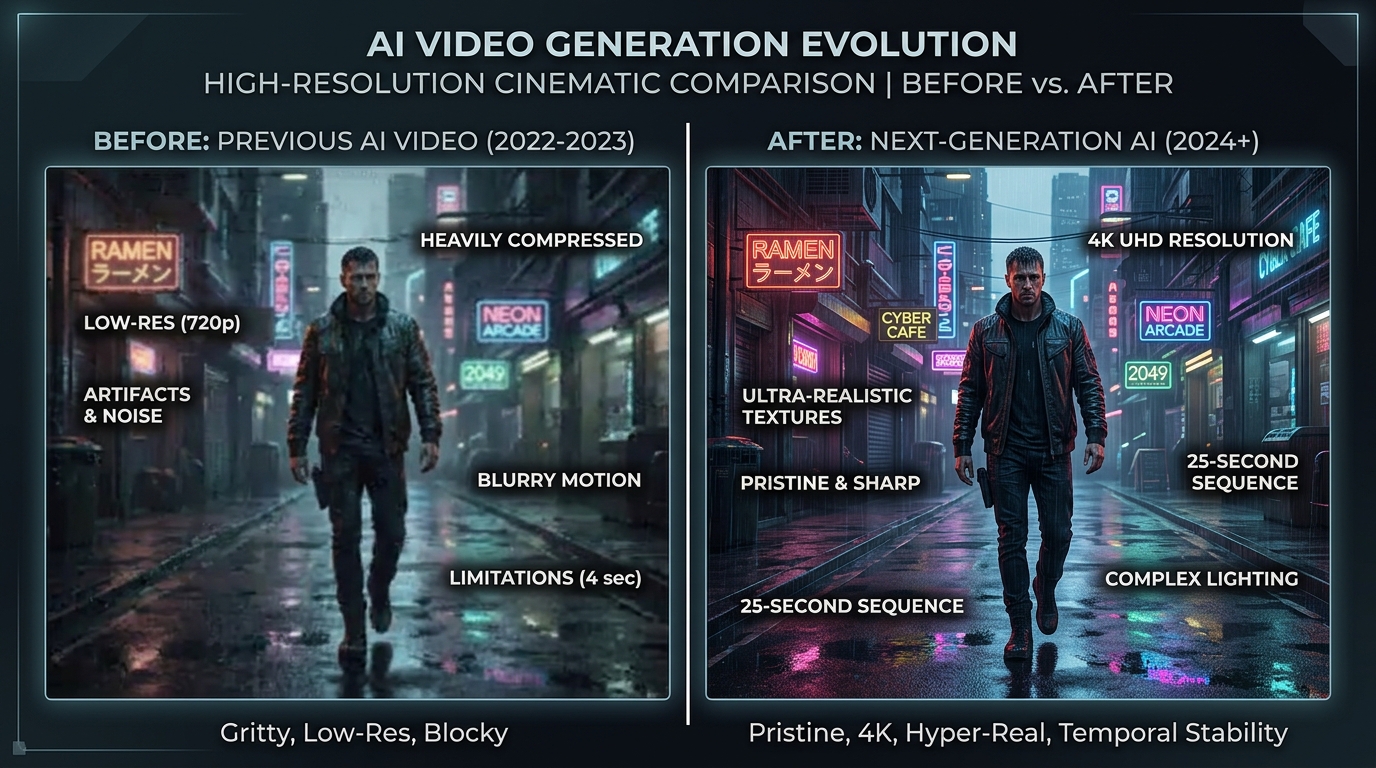
You'll also notice the exact first and last frame keyframing control maps motion paths directly to your storyboard.
This prevents the random hallucinatory drifting common in earlier models.
The native audio AI video integration analyzes the visual physics of your rendered scene to generate accurate foley effects.
Footsteps match the pavement type, and echoes adjust based on the generated room size.
Because processing happens entirely off-site, this cloud-based powerhouse requiring zero local GPU hardware frees up your editing rig for actual timeline assembly.
You get absolute creative control without the massive thermal throttling of a local server.
Instruction-Based Editing: The Multimodal Director
Wan 2.7 introduces a Diffusion Transformer architecture powered by a T5 encoder and MoE routing. This March 2026 release from Alibaba Tongyi Lab enables precise instruction-based video editing and true 4K cinematic fidelity for up to 20-second generations.
Frameworks like Editto showed early potential for text-driven scene adjustments.
But this multimodal AI director takes natural language command processing to a completely different level.
The system leverages a sophisticated VAE (Variational Autoencoder) to instantly alter lighting or camera movements on existing frames.
You also get exact first and last frame keyframing control.
Just type out a command like "pan left while dimming the background lighting".
The AI video generator 4K pipeline executes your spatial directions with absolute precision.
Then there's the audio integration.
You get a fully native audio AI video workflow that analyzes the physical geometry of your rendered scene.
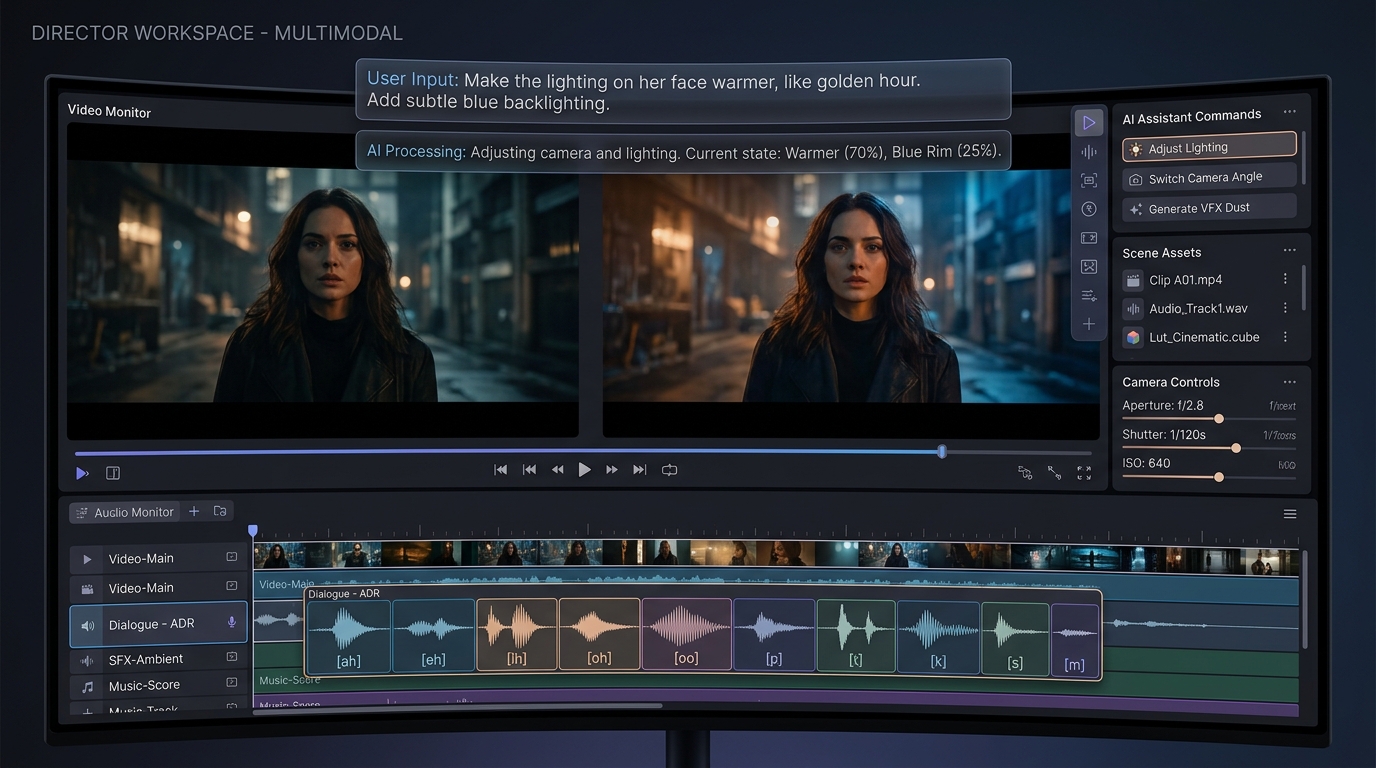
It automatically generates accurate foley effects and native ambient audio synchronization based on the room size and textures.
Plus, the engine delivers phoneme-level multilingual lip-sync.
Your characters will speak scripted lines with exact facial muscle tracking.
The official Wan 2.7 release date is locked for later this month.
When it drops, you'll have day-one availability directly on the platform.
No expensive local GPU setup is required.
Just use your unified credit system and start producing.
This video compares Wan 2.7 to Seedance 2.0, explaining the credit-based access, open-source rumors, and specific prompting tips for achieving audio and video synchronization.
The 3-Step Process for Absolute Frame Control
Achieving absolute frame control in Wan 2.7 requires a strict three-step keyframing workflow. By leveraging up to five simultaneous video inputs and 3x3 grid synthesis, directors can lock down terminal keyframes to guarantee exact spatial precision.
Here is the exact process to master this system.
First, you need to establish your visual anchors.
This engine processes up to five simultaneous video inputs at once.
You upload your primary subject, lighting references, and background plates.
The AI video generator 4K pipeline merges these assets into a single cohesive reference state.
Next, lock in your starting and ending shots.
You set precise terminal keyframe nuggets at 0:00 and your desired end point.
This forces the algorithm to calculate a rigid motion path between those two exact visual states.
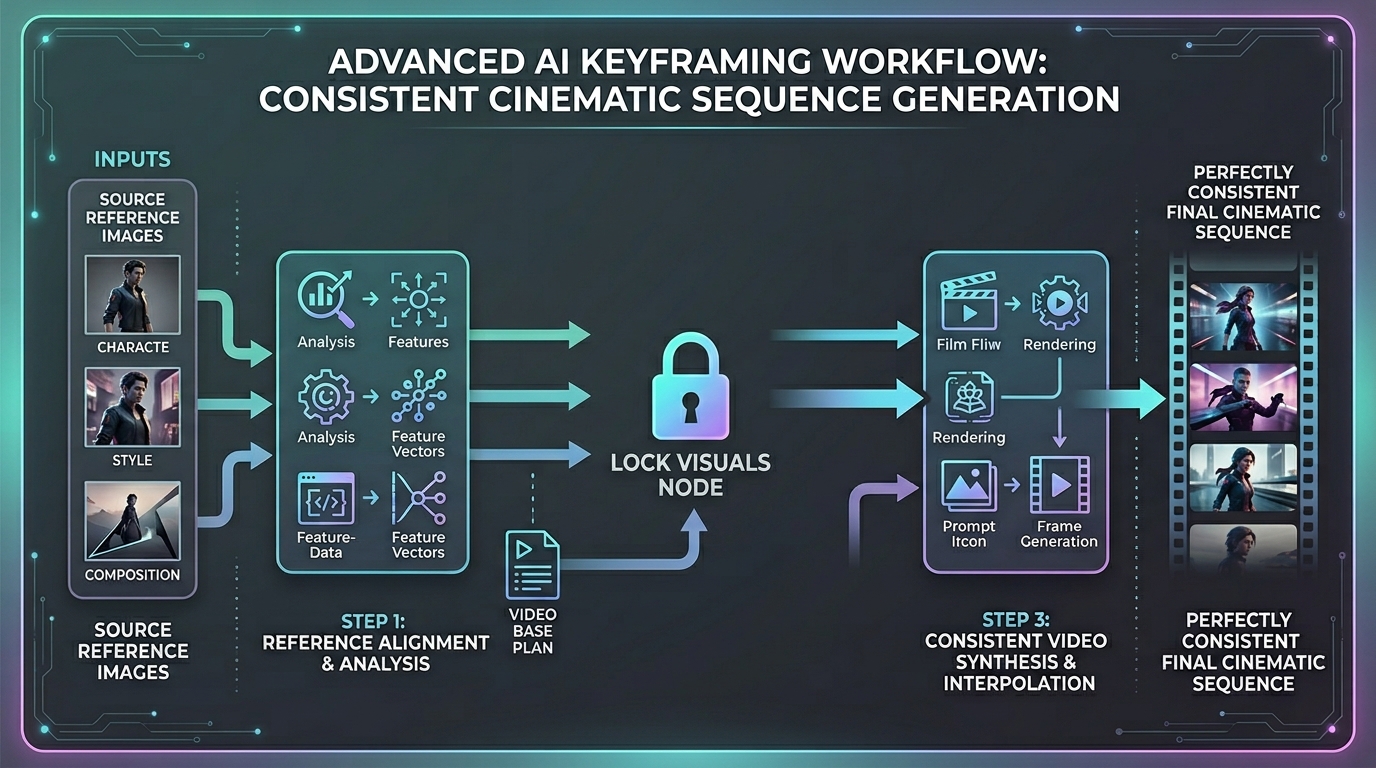
There is zero hallucinatory drifting.
Finally, you execute your micro-adjustments.
The system uses a 3x3 grid synthesis to isolate specific quadrants of your frame.
You apply instruction-based video editing commands directly to these targeted zones.
Want the top-left quadrant to dim while the center subject rotates?
Just type the command.
The render locks to your exact spatial coordinates.
March 2026 Deployment: Generating 4K Sequences on Day One
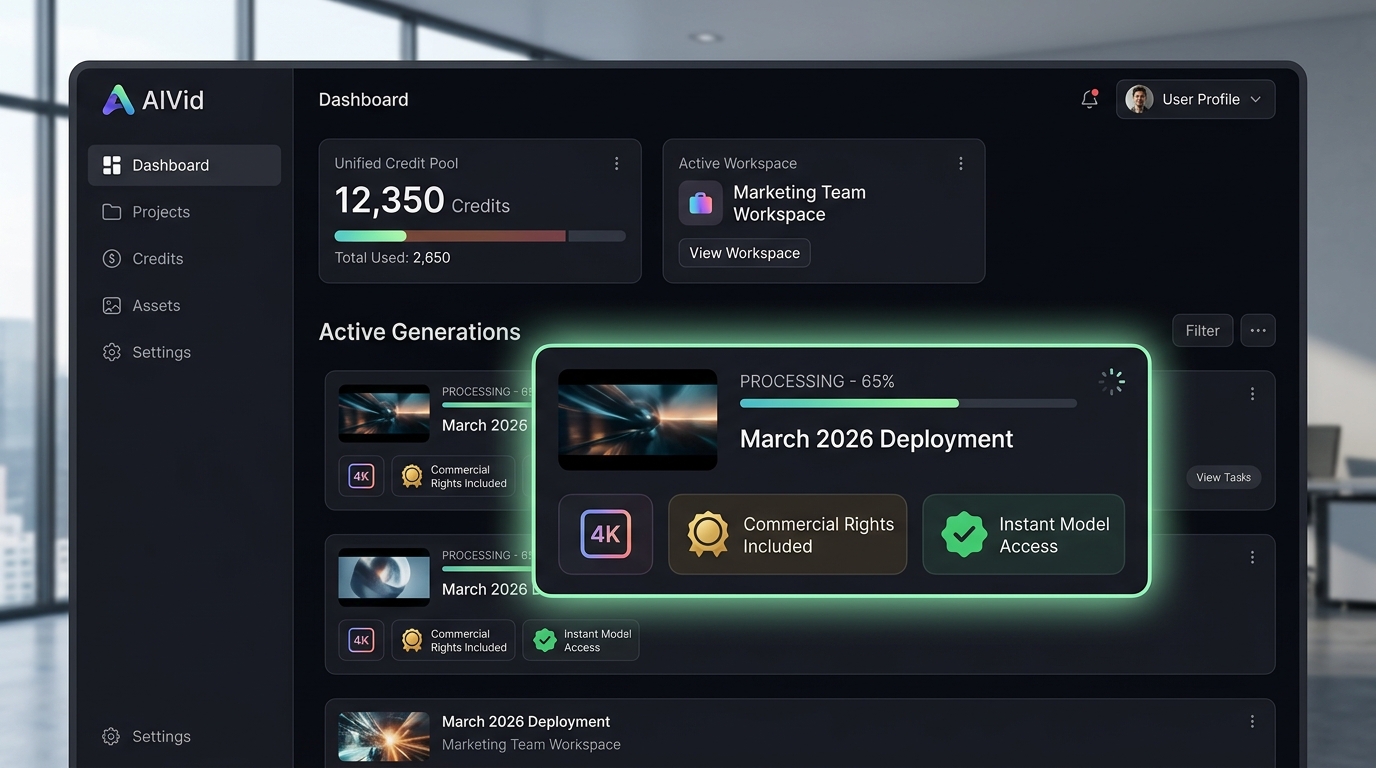
Launching in March 2026, the Wan 2.7 release date brings true 4K cinematic fidelity directly to your browser. Enterprise users can leverage unified credit systems to bypass hardware limits, instantly rendering commercial-grade sequences on day one.
The proof dropped on March 13, 2026.
Developer forums like Hacker News and AtlasCloud leaked the official deployment roadmap.
Look: the benchmarks confirmed a massive leap in rendering efficiency.
The Alibaba Tongyi Lab architecture utilizes synchronous audio-visual Flow Matching dynamics to push output speeds.
This means you get a native render instantly scaled through 4K matrices.
It easily handles the new 20-second generation limits without melting a local GPU.
The best part?
You don't need to manage individual API waitlists to access this powerhouse.
AIVid. integrates the 2.7 framework directly into its cloud architecture.
High-volume content marketers get immediate access.
Just select the model, apply your credits, and start producing.
Every export automatically includes full commercial rights for your campaigns.
Frequently Asked Questions
Is the Wan 2.7 release date still something you need to wait for?
No. Alibaba Tongyi Lab shipped Wan 2.7 in March 2026, so you should plan around live access rather than a future launch. What still varies is queue time, account access, and whether your workspace exposes the full multi-input stack. Confirm those details where you generate before you rebuild a pipeline.
When should you skip instruction-based video editing?
Skip it when the source clip has the wrong face, product, lens, or blocking. Language commands are strong at targeted changes such as wardrobe, weather, or a small camera nudge. They are weak at rebuilding a shot that was composed incorrectly. Regenerate the hero frame first, then issue a single edit.
How do you build a sequence longer than 20 seconds?
Split the scene into self-contained beats and generate each one separately. Lock the last frame of clip A as the opening keyframe of clip B so spatial placement stays consistent. Then assemble the pieces in your editor. One overloaded prompt for a full scene usually costs you the frame control this model is built for.
Do you need five video inputs on every Wan 2.7 job?
No. Bring extra inputs when you must match a product, a character, or a previous take across cuts. For a single isolated shot, one clean reference plus a short instruction is faster and leaves fewer conflicting motion cues. Save the 3x3 grid for continuity-critical work.
Is 4K from this AI video generator ready for final delivery?
It is often enough for web, social, and client preview. You should still watch faces, type, and fast motion for smear or flicker before you lock a master. If the clip will be recut, projected, or graded hard, inspect a full-resolution export rather than trusting the in-browser playback.
Can you use these clips in paid ads or client deliverables?
Check the host platform's current terms for commercial use before you deliver. Do not assume a generated file is cleared for trademarks, music, or a real person's likeness just because you wrote the prompt. If the brief involves a real brand or talent, get that clearance separately.
How should you brief a multimodal AI director so the shot stays locked?
Write like a director on set. Name the subject that must stay locked, then name one change and one camera move. If you stack three motions and a pile of style adjectives in the same line, the model has to guess which instruction wins, and frame control slips.

![Grok Imagine Quality Mode: The Complete 2026 Breakdown [Architecture Deep Dive]](/_next/image?url=https%3A%2F%2Fcdn.creatide.ai%2Fassets%2Fuploads%2Fimages%2F2026%2F04%2FJXf7eLJ9TRTb0IrursnGXNCU.jpeg&w=3840&q=75)
![How Wan 2.7 Unlocks Absolute Creative Freedom [2026 Guide]](/_next/image?url=https%3A%2F%2Fcdn.creatide.ai%2Fassets%2Fuploads%2Fimages%2F2026%2F04%2FTddDHXDCKvvA3BKiQcFxzHKL.jpeg&w=3840&q=75)
