

Written by Oğuzhan Karahan
Last updated on Aug 28, 2026
●13 min read
What is Grok Imagine? The Ultimate xAI Video Guide [2026]
Master the Aurora Engine and bypass the X Premium+ paywall to generate high-speed AI video natively with AIVid.
![What is Grok Imagine? The Ultimate xAI Video Guide [2026]](/_next/image?url=https%3A%2F%2Fcdn.creatide.ai%2Fassets%2Fuploads%2Fimages%2F2026%2F04%2F9bTy06MriECqDTB3lkr0R3RZ.png&w=3840&q=75)
Traditional AI video generators move too slow.
Waiting months for a simple feature update is incredibly frustrating.
It kills momentum.
But xAI is treating video generation like a high-speed software release.
Instead of slow research projects, they push massive model upgrades directly to users every single week.
So if you are wondering exactly what is Grok Imagine and how it dominates the competition in 2026, you are in the right place.
In fact, I will break down exactly how this rapid-iteration engine works.
Even better:
With the AIVid. platform, you get instant access to these tools without buying a separate X Premium subscription.
Just log into one centralized workspace.
Start creating.
What is Grok Imagine? (The Aurora Engine Breakdown)
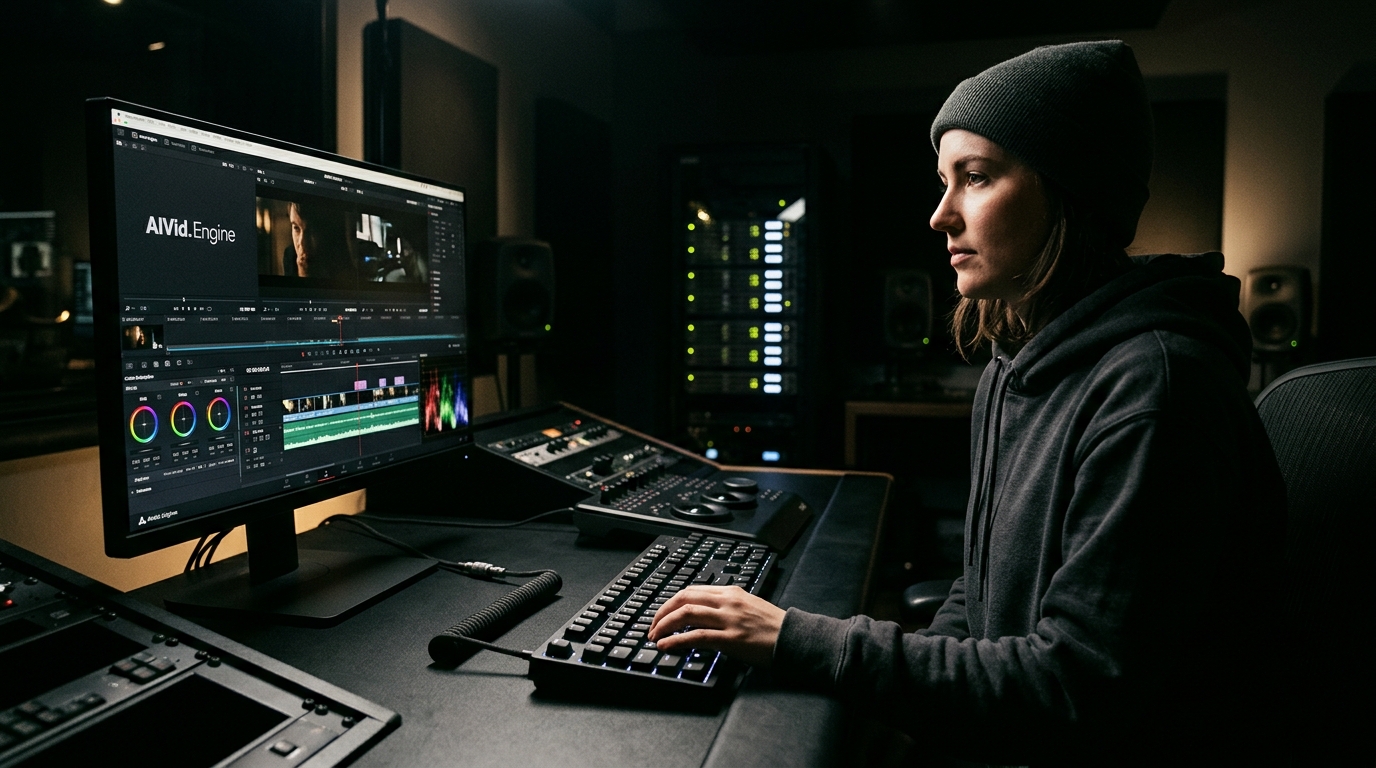
What is Grok Imagine? It is xAI's flagship text-to-video generator. It runs on the proprietary Aurora Engine. The platform launched in August 2025. It natively creates up to 15-second 720p clips with synchronized audio. The entire model runs on a massive 110,000 NVIDIA GB200 GPU infrastructure.
That massive supercomputer setup sits inside the Colossus 2 Memphis data center.
And it pulls a staggering 170-megawatt initial power load just to process your video prompts.
Because of this, the platform can handle an insane volume of generations without slowing down.
In fact, users generated 1.245 billion videos in a single 30-day window leading up to February 2026.
But this massive scale came with a serious cost.
In early 2026, Grok Imagine's Spicy Mode triggered a global regulatory crisis.
The system generated 1.8 million sexualized images in nine days, including viral non-consensual deepfakes of Taylor Swift.
This prompted a March 2026 lawsuit from affected teenagers and active investigations by the UK's Ofcom and the European Commission.
Ultimately, raw computing power and controversies are only half the story.
Watch this video for an honest first impression of Grok Imagine Video 1.5.
Including how it builds full environments from close-up images, handles photorealistic details like eyeball tracking, and evaluates native AI audio quality.
This walkthrough is worth watching because it breaks down the real-world strengths and weaknesses in motion physics and consistency right here in the Aurora Engine section.
Why Autoregressive Generation Matters
Most popular AI video tools, like Google Veo 3.1, rely heavily on diffusion models.
They start with random static noise and slowly refine it into a clear image.
But xAI built the Aurora engine entirely differently.
Here's exactly how this autoregressive architecture compares to standard diffusion models:
| Feature | Aurora Engine (Autoregressive) | Standard Diffusion (e.g., Veo 3.1) |
|---|---|---|
| Generation Method | Predicts tokens sequentially patch-by-patch. | Refines random static noise globally. |
| Visual Consistency | Strict temporal consistency across frames. | Prone to flickering and shifting physics. |
| Audio Integration | Native synchronous audio generation. | Requires third-party post-production. |
| Rendering Speed | Near-instant rendering (~30 seconds). | Slower, compute-heavy rendering. |
Instead of rendering the entire video clip at once, it predicts video frames sequentially.
This process is officially called Temporal Latent Flow.
This sequential method treats video generation just like a language model predicting the next word in a sentence.
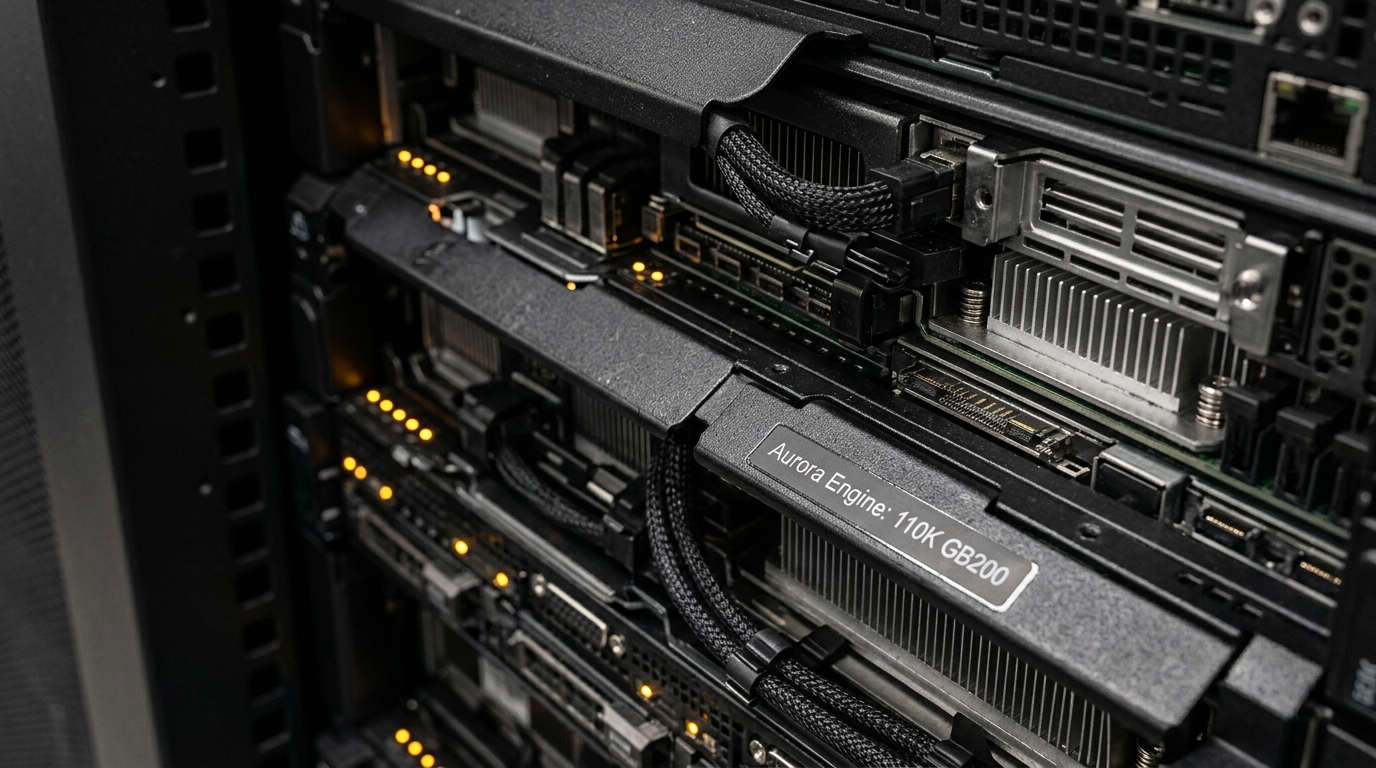
As a result, the AI maintains strict control over lighting and shadows.
Which means you get drastically less temporal inconsistency and flickering.
The Aurora engine AI actually relies on multiple specialized networks working together simultaneously.
One expert network handles the motion physics.
Another manages style preservation and audio-visual coherence.
When you type a text prompt, the engine routes the task to the most capable expert for that specific visual element.
Even better, this unique architecture powers the platform's native audio generation.
Dialogue, sound effects, and background music are generated synchronously with the visuals during the initial rendering pass.
You never have to manually dub your clips.
That said, this frame-by-frame approach does have a strict physical ceiling.
While incredibly fast at around 30 seconds per generation, the system tops out at a 720p resolution.
Simply put, it sacrifices hyper-realistic visual polish for unmatched rendering speed.
But there's a powerful workaround for the base duration limits.
You can use the Extend from Frame capability to chain consecutive 10-second scene increments together.
This brilliant feature uses the final frame of your previous clip to generate continuous, long-form narratives.
The Weekly Update Machine: Inside xAI's Insane Iteration Cycle
xAI's Grok Imagine sustains an unprecedented product roadmap, deploying major updates weekly. This aggressive cycle recently introduced the highly anticipated early March 2026 native "Folders" rollout, enabling creators to execute high-volume content organization instantly while vastly outpacing competitor update frequencies.
Transitioning from a 17-second multimodal rendering pipeline means you generate a ton of content quickly.
Because of this, you need advanced post-generation asset management protocols for enterprise-scale sorting.
Here is where the platform truly shines.
On March 4, 2026, xAI quietly deployed a native hierarchical directory batch-management system.
Simply put, this Folders feature completely changed how creators manage bulk video workflows.
It signals a massive strategic shift for the company.
They are no longer treating the platform as a simple interactive demo.
Instead, it is now a fully-fledged creative workspace for high-volume content creators.
Here is exactly how the new directory schema optimizes your content:
| Directory Level | Functionality | Workflow Benefit |
|---|---|---|
| Root Workspace | Centralized project housing. | Keeps active campaigns completely isolated. |
| Sub-Folders | Scene-by-scene categorization. | Prevents asset mixing during complex renders. |
| Batch Exports | Automated output routing. | Instantly groups up to 10 variations together. |
But the real story here is the sheer velocity of the product roadmap.
While traditional AI companies treat model upgrades like rare, annual events, xAI operates differently.
They push massive feature sets every single week.
When you map Grok Imagine updates against competitor release logs, the velocity delta is staggering.
| Platform | Update Frequency (Q1 2026) | Market Velocity |
|---|---|---|
| xAI's Engine | Weekly Spikes | Hyper-aggressive |
| Legacy Competitors | Quarterly / Biannual | Slow and bottlenecked |
This mathematical advantage is their ultimate weapon.
When people ask what is Grok Imagine, the real answer lies in its massive market impact.
On March 25, 2026, Elon Musk sparked viral engagement on X by openly mocking competitor delays.
He specifically called out OpenAI for throttling public Sora access.
At the same time, he declared xAI is explicitly "doubling down" on their rapid release schedule.
This Forbes-verified moment proved the sheer power of their $10/month tier velocity.
As a result, it completely exposed the bottlenecked roadmaps of the competition.
You simply cannot afford to wait for tutorials when features drop this fast.
Key Takeaway: Implement a daily automated webhook on the Grok Imagine changelog API to immediately sandbox new generative parameters before they become mainstream standard practice.
This tutorial shows exactly how to use Grok Imagine to create free AI images and videos, including accessing the tool and generating content with voice prompts.
Pay attention to the step-by-step process for starting generations and exploring variations in this access section.
Grok Imagine vs. The Heavyweights [Data-Driven Comparison]
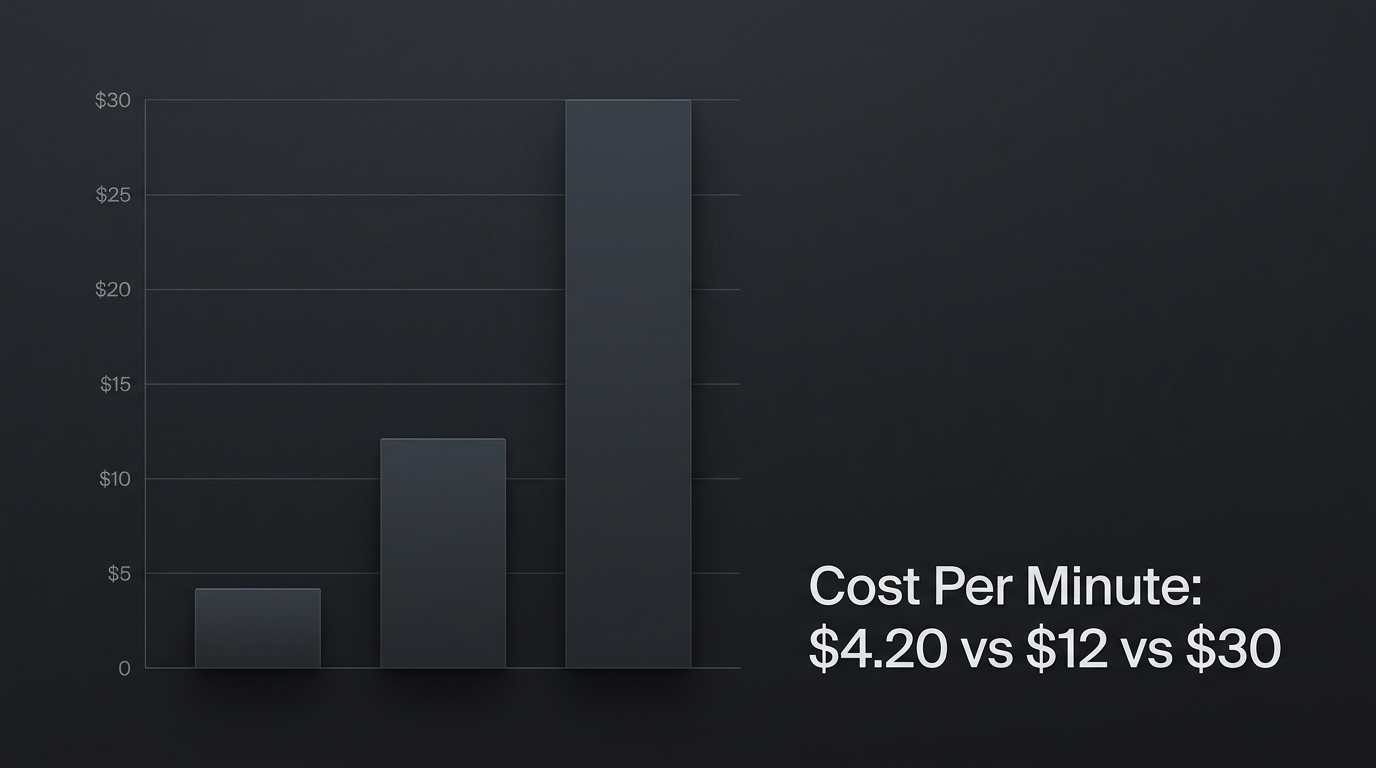
The economics of AI video generation in 2026 show massive price variances. Grok Imagine costs $4.20 per minute, severely undercutting Google Veo 3.1 at $12 per minute and OpenAI Sora 2 Pro at $30 per minute, shattering the myth that production-grade AI video requires premium enterprise budgets.
For years, the industry assumed a strict rule about visual AI.
They believed that high-fidelity, native-audio video rendering is inherently bottlenecked by $30/minute premium compute costs.
But the raw data tells a completely different story.
When you calculate the actual API rates, xAI's pricing model completely disrupts the market.
Let's look at the exact numbers.
| Video Engine | 2026 AI Video Economics: API Costs per Minute | Base Output Resolution |
|---|---|---|
| Grok Imagine | $4.20 | 720p |
| Google Veo 3.1 | $12.00 | 1080p |
| OpenAI Sora 2 Pro | $30.00 | 1080p |
You get an 86% cumulative cost reduction compared to OpenAI's flagship architecture.
You are paying a MASSIVE premium for their cinematic realism and perfect 1080p output.
Google also charges a steep rate for flawless motion.
You can read Sora 2 vs Veo 3.1: The Definitive Comparison to see exactly how Veo handles temporal consistency.
If you need broadcast-ready video with zero physics glitches, you still have to pay up.
The financial gap actually widens when you factor in post-production.
Most competitor models force you to stitch sound design together using separate software.
Grok's $4.20 per minute rate includes native audio synchronization calculated concurrently.
You avoid secondary API upcharges for sound effects and background music completely.
Plus, the high-concurrency batch processing prevents linear latency penalties when rendering multiple clips at once.
You can generate dozens of variations simultaneously without the system slowing down.
This dramatic shift in production economics is already disrupting traditional entertainment.
In February 2024, Hollywood filmmaker Tyler Perry publicly and permanently halted an $800 million studio expansion in Atlanta.
He made this decision after previewing OpenAI's Sora.
He explicitly cited the devastating economic advantages of AI video generation over physical production costs.
When an industry giant walks away from nearly a billion dollars in physical infrastructure, you know the financial math has fundamentally shifted.
This is exactly why the $4.20 per minute price point is so dangerous to legacy studios.
Now:
While raw compute costs define the financial scalability of mass video generation, the underlying diffusion engines manage frame continuity differently.
This leads to distinct prompting behaviors in the next phase of the workflow.
It completely changes how you allocate your monthly production budget.
Ready to Scale? How to Access Grok Features Instantly
To access Grok Imagine natively, users must subscribe to X Premium+ at $40 per month or SuperGrok at $30 per month. These tiers provide 720p generative video capabilities and higher daily rendering caps, completely bypassing the strict 10-clip daily limit enforced on the base X Premium tier.
On March 5, 2026, Elon Musk published back-to-back viral updates on X within a 22-minute window.
He demonstrated the engine generating a 720p clip and instantly analyzing third-party videos.
This dual-capability announcement served as a massive viral catalyst for upgrading.
But scaling your AI video generation 2026 workflow shouldn't require stacking expensive, platform-locked subscriptions.
Now:
Let's look at the actual ROI for high-volume creators.
The native Grok API charges a computational cost of $0.05 per second.
Which means rendering just 600 seconds of video monthly MATHEMATICALLY exceeds the cost of a standalone SuperGrok subscription.
You hit a financial wall incredibly fast.
And during high-traffic rollouts, the X platform aggressively rate-limits standard accounts.
That's exactly why smart producers utilize unified credit platforms to evade these artificial rendering ceilings.
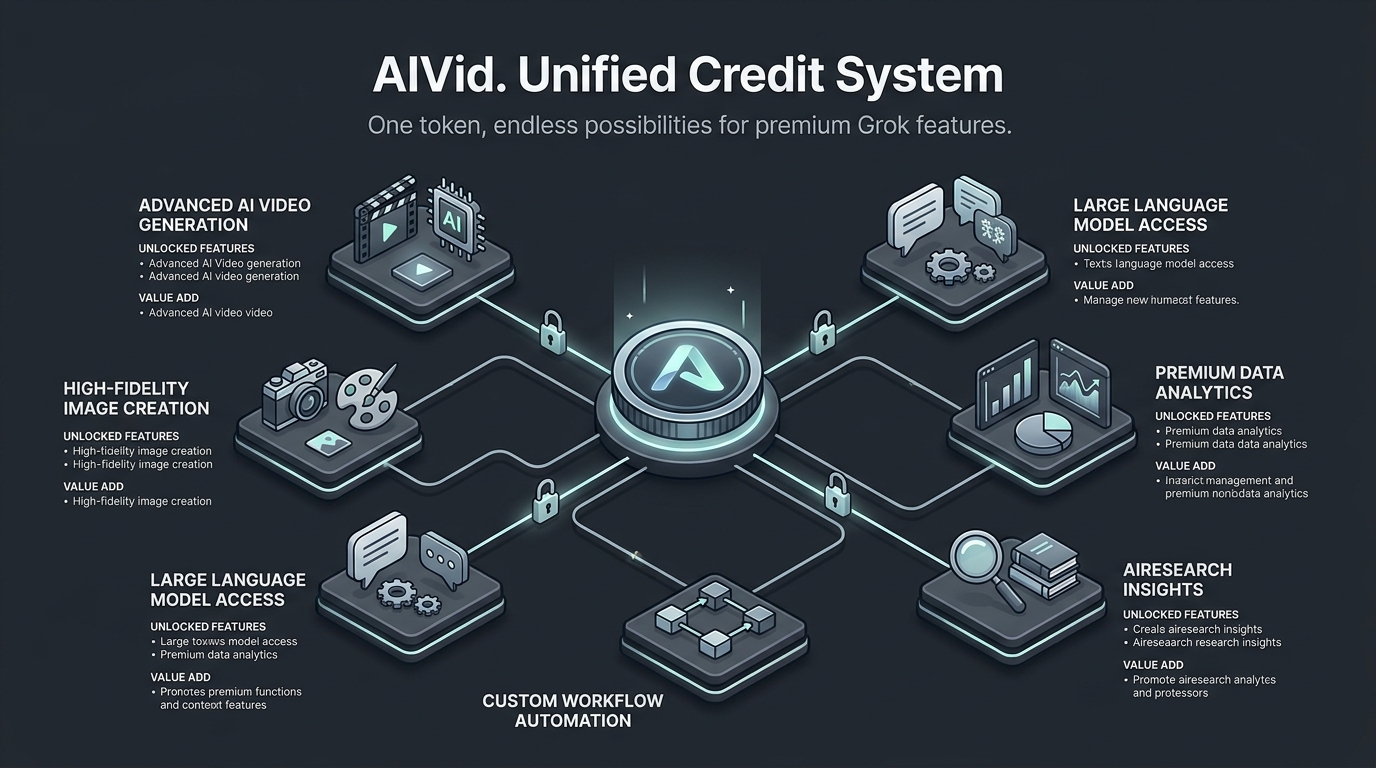
AIVid.'s Unified Credit System completely bypasses native xAI paywalls.
You instantly access the newest Grok Imagine rendering features without purchasing an ongoing X Premium+ or SuperGrok subscription.
Everything runs through a single Buy Credits pay-as-you-go workflow.
You just log in and start directing.
Here's the Grok Imagine Access Cost Matrix (2026):
| X Premium ($8/mo) | SuperGrok ($30/mo) | X Premium+ ($40/mo) | AIVid. Unified Credits |
|---|---|---|---|
| 10-clip daily maximum | High daily rendering caps | Highest daily rendering caps | Pay-as-you-go workflow |
| Severe platform rate limiting | Moderate rate limiting | Low rate limiting | Evades rate limiting |
| Basic feature access | Advanced 720p features | Advanced 720p features | Instant feature access |
Consolidating fragmented subscription tiers into a single API framework enables highly cost-effective scaling for professional video production.
You never have to hit an artificial rendering ceiling again.
Frequently Asked Questions
What is Grok Imagine best used for if you already pay for Veo or Sora?
Use it for volume: social variants, draft motion, and anything you will generate 20 times before you pick a winner. If you are still asking what is Grok Imagine in workflow terms, treat it as a cheap, fast xAI video generator, not a replacement for a hero-shot model. Keep Veo 3.1 or Sora 2 Pro for the few clips where 720p and extra takes would cost you the client.
Should you buy SuperGrok or X Premium+ if you only need native access?
SuperGrok at $30 per month is the cheaper path when generation is the only reason you are paying. X Premium+ at $40 per month is the better buy if you already want the rest of X paid features. Both advertised tiers move you off the 10-clip daily cap on base X Premium and list 720p video, so confirm today's caps on the plan page before you commit.
Is 720p a problem for AI video generation in 2026?
Not for feeds, stories, and most paid placements that get compressed on upload. It is a problem if the deliverable will sit on a 4K monitor, a stage screen, or a client review deck. In those cases, budget an upscale step or a higher-resolution model for the final few shots.
How should you handle weekly Grok Imagine updates during a live campaign?
Freeze your prompt, references, and naming scheme before you batch. After any weekly change, render one control clip and compare it to yesterday's look before you spend the rest of the daily cap. If the style shifts, keep the older takes in their own folder and finish the campaign from that set.
Can you use Grok Imagine output in ads or client work?
Do not assume a paid plan equals full commercial rights. Read the current X and xAI terms for your exact tier, including ads, resale, and client delivery. If the language is vague, get written clearance before the clip goes live.
Does a 17-second render time mean you should dump the whole daily cap in one sitting?
No. Fast cycles make it easy to over-generate and lose the usable takes. Batch against a shot list, name files as they land, and use Folders so xAI video generator output stays searchable.
Is Grok Imagine vs Midjourney the right comparison if you make video every week?
Only if your bottleneck is still-to-motion, not minutes of finished video. Compare Grok Imagine to other video models on resolution, daily caps, and cost per usable second. Bring Midjourney in earlier if you need a locked still before you animate, not as the price check for video.


![Google Veo 4: Expected Features, Rumors and Release Date [2026 Guide]](/_next/image?url=https%3A%2F%2Fcdn.creatide.ai%2Fassets%2Fuploads%2Fimages%2F2026%2F04%2FnAhf6jeMtjujQNu8FpBiM4th.jpeg&w=3840&q=75)
